




Menu

How to Shut Off Main Water Valve in Pittsburgh – Expert Steps to Protect Your Home in an Emergency

Learn the exact location and proper technique to turn off your main water supply before a burst pipe floods your home, with step-by-step guidance from Pittsburgh's trusted plumbing professionals.

Slider Image 1
Slider Image 2
Slider Image 3
Slider Image 4
Slider Image 5
Slider Image 7
Slider Image 8
Slider Image 9
Slider Image 10
Slider Image 11

Why Every Pittsburgh Homeowner Needs to Know Their Main Shutoff Location

When a pipe bursts at 2 AM or your water heater starts leaking across the basement floor, you have minutes to act before water damage spreads through drywall, flooring, and personal belongings. The difference between a manageable repair and thousands in restoration costs often comes down to how quickly you can shut off water supply to home systems.

Pittsburgh's freeze-thaw cycles put serious stress on residential plumbing. When temperatures drop below freezing, then spike back up, pipes expand and contract. Older homes in neighborhoods like Squirrel Hill and Shadyside often have galvanized steel supply lines that become brittle over decades. The result is sudden failures that give zero warning.

Knowing how to turn off main water supply gives you control when disaster strikes. Most Pittsburgh homes built before 1980 have their main shutoff valve in the basement, typically within five feet of where the supply line enters through the foundation wall. Newer construction in developments around the South Hills may have the valve in a ground-level utility closet or attached garage.

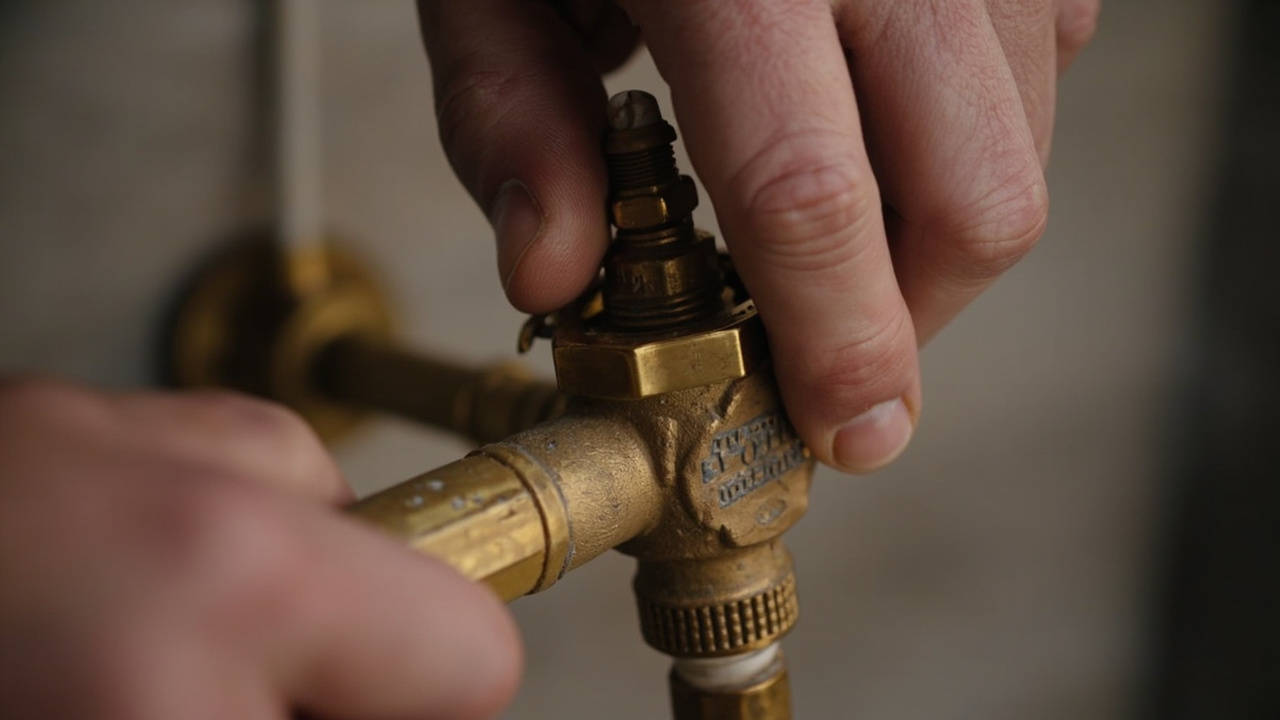
The valve itself is usually a gate valve or ball valve. Gate valves have a round handle that turns multiple rotations. Ball valves have a lever handle that moves 90 degrees. Both close the main water shut off valve completely when turned clockwise to the right. You should locate this valve today, while you have time to think clearly, not during an emergency when water is pouring into your living space.

Test the valve annually by turning it off and back on. Valves that sit unused for years can seize, rendering them useless when you need them most.

Why Every Pittsburgh Homeowner Needs to Know Their Main Shutoff Location
The Correct Method to Close Your Main Water Valve

The Correct Method to Close Your Main Water Valve

Turning off house water main sounds simple, but doing it wrong can damage the valve mechanism or leave you with partial flow that continues flooding your home.

Start by clearing the area around the valve. Move storage boxes, holiday decorations, or any items blocking access. You need room to move and apply force if the valve resists turning.

For a gate valve with a round handle, turn it clockwise. Count the rotations. Most residential gate valves require three to five full turns to close completely. Turn slowly and steadily. Forcing a stuck valve can strip the threads or break the stem. If the valve resists after one rotation, stop. The valve may need replacement, and forcing it can cause the stem to snap off inside the valve body.

For a ball valve with a lever handle, the lever should align with the pipe when open. Turn it 90 degrees perpendicular to the pipe to close. The movement should feel smooth. If you encounter grinding or excessive resistance, the ball inside may be corroded.

After closing the valve, open a faucet on the lowest floor of your home. This relieves pressure in the lines and confirms the water is actually off. You should see water flow briefly, then stop completely. If water continues flowing after 30 seconds, the valve is not fully closed or has failed internally.

In Pittsburgh's older housing stock, main shutoff valves frequently fail due to mineral buildup from our moderately hard water supply. The Allegheny County water system averages 120-150 parts per million of dissolved minerals. Over decades, calcium deposits can prevent valves from closing completely.

If your valve will not turn or will not stop flow when closed, you need professional replacement before an emergency occurs.

What Happens When You Need to Shut Off Water to the Whole House

How to Shut Off Main Water Valve in Pittsburgh – Expert Steps to Protect Your Home in an Emergency
01

Locate the Valve

Your main shutoff sits where the municipal supply line enters your home. In Pittsburgh basements, look along the front wall facing the street, typically near the water meter. The meter itself is usually within three feet of the shutoff valve. You will see a larger diameter pipe entering through the foundation, transitioning to your home's distribution system. This entry point is where turning off main water supply begins.
02

Turn the Valve

Close the valve by turning clockwise. Use both hands for leverage on gate valves with round handles. For lever-style ball valves, pull or push the handle until it sits perpendicular to the pipe. Do not use pliers or wrenches unless the valve is designed for tool operation. Excessive force on a valve handle can break the bonnet nut or crack the valve body, creating a new leak at the valve itself.
03

Verify Shutoff

Open a faucet on the first floor or basement to confirm flow has stopped. You should see pressure release, then nothing. Check the original leak location to ensure water has stopped flowing. If the emergency continues, the problem may be isolated to a fixture shutoff valve or the main valve has failed. At this point, contact a licensed plumber immediately to prevent further damage.

Why Pittsburgh Homes Need Regular Main Valve Inspections

Pittsburgh's housing infrastructure tells a story of different eras. Homes in East Liberty and Lawrenceville date back 100 years or more. These properties often have original plumbing components that have never been serviced. The main shutoff valve is one of those forgotten elements until it fails to function.

Ace Plumbing Pittsburgh works throughout Allegheny County and understands the specific challenges of our local housing stock. We see galvanized steel valves in pre-war homes that have calcified internally. We find gate valves in post-war ranches where the packing nut has dried out and leaks whenever someone tries to turn the handle. We encounter ball valves in 1990s construction where the ball itself has corroded to the valve seats.

Our technicians recommend annual testing of your main shutoff. This simple maintenance step can reveal problems before you are standing in six inches of water trying to close a valve that has not moved in 15 years.

We also inspect for valve accessibility. Pittsburgh homes often accumulate belongings in basements over decades. Your shutoff valve should have a clear three-foot radius around it. You should be able to reach it in the dark if necessary.

Local building codes require functional shutoff valves, but enforcement typically happens only during property transfers or major renovations. By then, a failed valve can derail a sale or add unexpected costs to your project.

Beyond the main shutoff, we evaluate the entire supply system. Pittsburgh's municipal water pressure runs between 50 and 80 PSI depending on your elevation and proximity to pumping stations. Higher pressure accelerates wear on valves and fixtures. We can install pressure-reducing valves to extend the life of your entire plumbing system.

Our familiarity with Pittsburgh's neighborhood characteristics helps us predict failure points before they become emergencies.

What You Should Know About Main Shutoff Valves

Valve Lifespan and Replacement Timing

Main shutoff valves typically last 20 to 30 years under normal conditions. Pittsburgh's water chemistry and freeze-thaw cycles can shorten this timeline significantly. Gate valves fail more frequently than ball valves due to their internal washer and stem design. If your valve drips water from the packing nut when turned, or requires excessive force to operate, replacement is overdue. We can replace a main shutoff valve in two to three hours, including pressure testing and verification. This service prevents the nightmare scenario of a valve breaking off mid-emergency.

Secondary Shutoffs Throughout Your Home

Beyond the main valve, your home should have individual shutoffs at every fixture and appliance. Toilets, sinks, water heaters, washing machines, and dishwashers should each have dedicated shutoff valves. These allow you to isolate problems without turning off water to the entire house. We inspect these secondary valves during routine service calls and recommend upgrades when we find old multi-turn valves that are prone to failure. Quarter-turn ball valves at fixtures provide more reliable shutoff and easier operation for homeowners.

Emergency Preparedness

Every adult in your household should know where the main shutoff sits and how to operate it. Tag the valve with a visible label. Keep a flashlight near the valve location since emergencies often happen during power outages or at night. Take a photo of the valve and its location, then share it with family members. In genuine emergencies, panic reduces your ability to think clearly. Having practiced the shutoff procedure in advance makes the difference between confident action and fumbling in the dark while water destroys your belongings.

Professional Assessment and Upgrades

If your main shutoff valve shows signs of age, corrosion, or difficult operation, schedule a professional evaluation before you face an emergency. We can install modern ball valves with lever handles that require minimal effort to operate. For homes with especially hard water or older supply lines, we may recommend a full valve and meter riser replacement to ensure reliable shutoff capability. This service typically includes installing a new ball valve, replacing corroded piping near the valve, and pressure testing the entire repair to confirm proper operation.

Frequently Asked Questions

You Have Questions,
We Have Answers

How do I turn off the main water valve in my house? +

Locate your main water valve first. It sits where your water line enters the home, often near the water heater or in the basement. Turn the valve clockwise to shut it off. Gate valves require multiple full turns, while ball valves need just a quarter turn. Test by running a faucet. If water stops flowing, you did it right. Pittsburgh homes built before 1950 often have gate valves that stick. If yours resists, do not force it. You risk breaking the valve and flooding your basement. Call a plumber to replace corroded valves before an emergency happens.

Where is my main water shut off valve? +

Check your basement first. Most Pittsburgh homes have the main shut-off valve near where the water line enters through the foundation wall. Look near the front of the house facing the street, close to the water heater or along exterior walls. In homes without basements, check the crawl space, utility closet, or garage. Older homes in neighborhoods like Lawrenceville or Shadyside may have valves in unusual spots due to renovations. If you cannot find it, trace your water meter. The valve typically sits within five feet of the meter on the house side.

What does the main water shut off valve look like? +

Your main water shut-off valve comes in two types. Gate valves have a round handle you turn multiple times, like a ship wheel. They are common in older Pittsburgh homes. Ball valves have a lever handle you turn 90 degrees. When the lever aligns with the pipe, water flows. When perpendicular, water stops. Ball valves are faster and more reliable. The valve body is usually brass or chrome, about the size of your fist. A tag or label may identify it. Corroded valves turn green or brown from mineral deposits in Pittsburgh water.

Do outdoor faucets have separate shut-off valves? +

Yes. Most outdoor faucets have individual shut-off valves inside your home. Find them along the wall where the outdoor faucet mounts. They prevent freeze damage during Pittsburgh winters when temperatures drop below 20 degrees. Turn them off in November and drain the exterior faucet. Open the outside valve to release trapped water. This step prevents burst pipes common in January and February. Some newer homes have frost-free sill cocks that extend the valve seat inside where it stays warm. These still benefit from a shut-off valve for repairs and winterization.

Can you shut off your own water main? +

Yes, you can shut off your own main water valve. You do not need special tools or a plumber for this task. Homeowners should know how to do this before a pipe bursts or a toilet overflows. Practice now, not during an emergency. Turn the valve slowly to avoid water hammer, which damages pipes and fixtures. If your valve has not been turned in years, it may stick. Do not force it. Apply penetrating oil and wait 30 minutes, then try again gently. If it still resists, call a professional. A broken valve creates a bigger emergency than the one you tried to stop.

Is it safe to shut off the main water valve? +

Shutting off your main water valve is safe and sometimes necessary. Do it when you leave town for more than three days, especially in winter. Pittsburgh freeze-thaw cycles cause burst pipes in vacant homes. Turn it off before major plumbing repairs to prevent flooding. One caution: if you have a water-based heating system, shutting off water may damage your boiler. Check your system first. After shutting off water, open a faucet to release pressure and drain the lines. This prevents vacuum locks and makes it easier to turn water back on later without hammering pipes.

Do all homes have a main water shut-off valve? +

Nearly all homes have a main water shut-off valve. Building codes require them. However, the valve location varies based on when your home was built. Pittsburgh homes from the early 1900s may have valves in odd locations due to additions or renovations. Some row homes share a valve between units, common in neighborhoods like the South Side. Mobile homes sometimes have the valve outside in a ground box. If you absolutely cannot find a valve inside, check outside near the foundation for a buried valve box. Contact Pittsburgh Water and Sewer Authority if you need help locating the curb stop valve they control.

How do I find a hidden shutoff valve? +

Start at the water meter and trace the main supply line toward your home. The shut-off valve sits somewhere along that path. Check behind stored items, inside finished walls near access panels, or in drop ceilings. Pittsburgh basements often have makeshift storage blocking valve access. Use a flashlight and follow the largest diameter pipe entering your home. In rowhouses, check party walls. Some valves hide behind removable panels. Tap walls listening for hollow spots that indicate access points. If the valve was drywalled over during renovations, call a plumber with a pipe locator tool to find it without demolition.

Where can I find main water shut off? +

Look where the main water line enters your house. In Pittsburgh, this is usually the basement front wall facing the street. Follow the water meter. The shut-off valve sits on the house side of the meter, within a few feet. Check near the water heater, along foundation walls, or in utility rooms. Homes on slopes may have the line enter through a side wall. Crawl spaces hide valves under insulation or near floor joists. If your home has public water, the line enters underground from the curb. Private well systems have valves near the pressure tank.

Is my main water shut off valve by my water heater? +

Not always. The main water shut-off valve may be near your water heater, but it is not guaranteed. Many Pittsburgh homes have the valve close to the water heater because both sit near where the main line enters. However, the water heater may have moved during renovations while the main valve stayed put. What you see near the water heater might be a secondary valve controlling just the heater supply, not the whole house. Test by turning it off and checking other faucets. If they still run, you found the wrong valve. Keep searching near the foundation entry point.

How Pittsburgh's Aging Infrastructure Affects Your Main Water Shutoff

Pittsburgh's water distribution system includes supply lines installed as far back as the early 1900s. Many neighborhoods in the East End, North Side, and South Hills receive water through aging municipal pipes that introduce sediment and mineral particles into your home's plumbing. This sediment accelerates wear on valve components, particularly gate valves with their compression washers and threaded stems. The Allegheny County water system also experiences seasonal pressure fluctuations as demand changes between winter and summer months. These pressure changes stress valve seals and packing nuts, leading to leaks and operational failures over time.

Ace Plumbing Pittsburgh has serviced thousands of homes across every Pittsburgh neighborhood. We understand the specific valve types installed during different construction eras and can identify failure risks by the age and style of your home. Our technicians carry replacement valves on their trucks because we know how often these components fail in our local housing stock. When you call us for main valve service or replacement, you work with plumbers who have seen every variation of Pittsburgh's residential plumbing systems and can solve problems efficiently without unnecessary diagnostic visits or parts delays.
Plumbing Services in The Pittsburgh Area

We are proud to be the trusted plumbing partner for the entire Pittsburgh area and its surrounding communities. Our dedicated team is committed to providing prompt and efficient service wherever you are. To get a better sense of our service area and to get in touch with us for all your plumbing needs, please take a look at our location on the map below. We’re always here to help.

Address:
Ace Plumbing Pittsburgh, 1450 Fifth Ave, Pittsburgh, PA, 15219

Additional Services We Offer

Our news updates

Latest Articles & News from The Blogs

Why You Need a Plumbing Camera Inspection Before Buying That Mount Oliver Fixer Upper \n\n Buying a fixer upper in…

Why You Need a Plumbing Camera Inspection Before Buying That Mount Oliver Fixer Upper

Why You Need a Plumbing Camera Inspection Before Buying That Mount Oliver Fixer Upper \n\n Buying a fixer upper in…

Replacing Every Old Pipe in Your Swissvale Home Without the Stress

Replacing Every Old Pipe in Your Swissvale Home Without the Stress Swissvale homes built before 1970 often hide a ticking…

Reliable Ejector Pump Repair and Install for Robinson Township Basement Bathrooms

Expert Ejector Pump Repair in Robinson Township PA Basement bathrooms in Robinson Township homes often sit below the main sewer…

Contact Us

Do not wait for an emergency to discover your main water valve does not work. Call Ace Plumbing Pittsburgh at (412) 382-8366 to schedule a shutoff valve inspection and test. We will verify operation, make necessary repairs, and give you confidence that you can stop water flow when it matters most.