




Menu

Commercial Water Heater Systems in Pittsburgh – Minimize Downtime with Industrial-Grade Installation and Retrofit Services

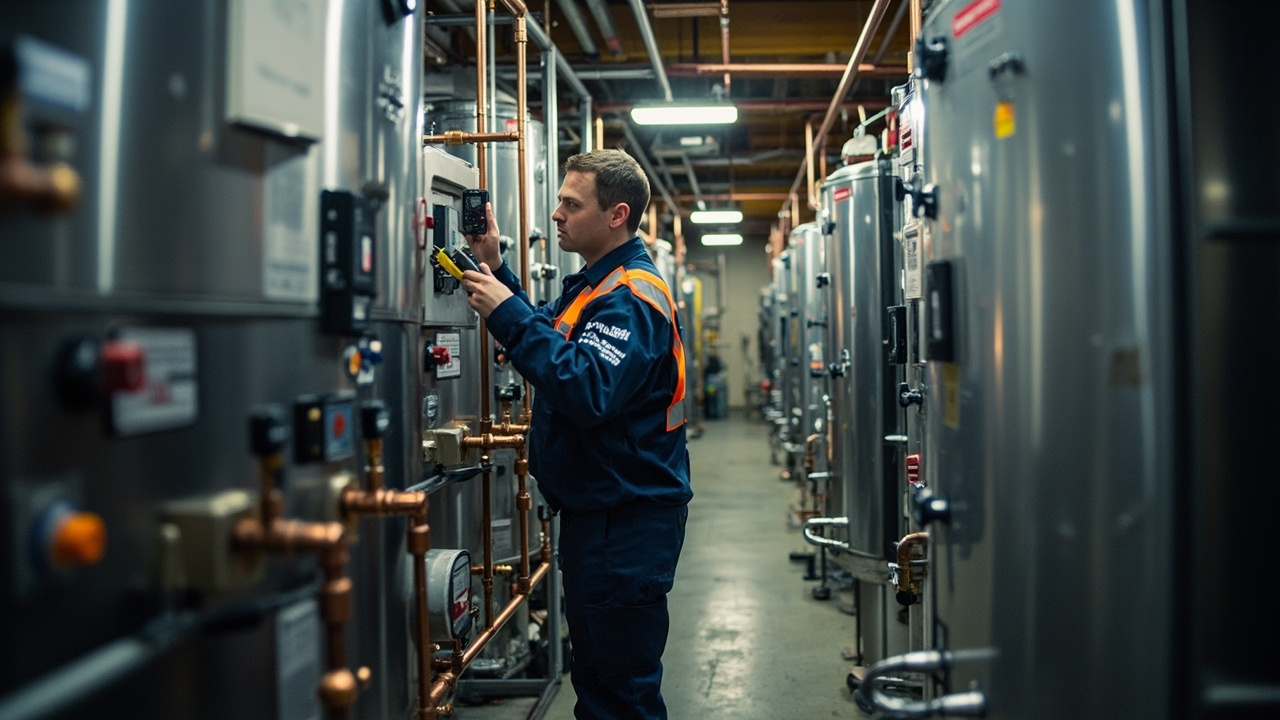
Apex HVAC Pittsburgh delivers large capacity water heaters and commercial hot water systems engineered for continuous operation in hospitals, manufacturing facilities, hotels, and multi-tenant buildings across Allegheny County.

Slider Image 1
Slider Image 2
Slider Image 3
Slider Image 4
Slider Image 5
Slider Image 7
Slider Image 8
Slider Image 9
Slider Image 10
Slider Image 11

Why Pittsburgh's Industrial Facilities and Commercial Buildings Demand Reliable Hot Water Capacity

Pittsburgh's economy runs on manufacturing, healthcare, and hospitality. A failed commercial water heater in a hospital surgical wing or a downtown hotel creates liability exposure and revenue loss measured in thousands per hour. Industrial water heaters in facilities along the Monongahela River face hard water conditions from limestone bedrock, shortening tank lifespan through mineral buildup and accelerating anode rod corrosion.

Pittsburgh's freeze-thaw cycles stress commercial grade water heaters in parking structures and loading docks where ambient temperatures drop below freezing for weeks. Facilities with exposed piping in mechanical rooms require commercial hot water systems with robust insulation and recirculation pumps to prevent temperature loss during idle periods.

Large capacity water heaters serving restaurant districts in Lawrenceville or Strip District face peak demand surges during lunch and dinner service. Undersized systems lead to complaint calls and health code violations when dishwashing temperatures fall below 180 degrees. Industrial hot water systems in food processing plants near the Produce Terminal require precise temperature control to meet USDA sanitation standards.

Buildings constructed before 1980 in the Cultural District and Oakland often house outdated boiler-based hot water systems with asbestos insulation and cast iron heat exchangers. Retrofitting these spaces with modern commercial water heater systems requires compliance with Allegheny County mechanical codes and coordination with building management to minimize tenant disruption. Commercial clients cannot afford trial-and-error installations or weekend emergency calls caused by improper sizing.

Why Pittsburgh's Industrial Facilities and Commercial Buildings Demand Reliable Hot Water Capacity
How We Engineer Commercial Water Heater Systems for Operational Continuity

How We Engineer Commercial Water Heater Systems for Operational Continuity

We calculate peak demand using fixture unit counts, not guesswork. A 200-room hotel requires different recovery rates than a 50-unit assisted living facility. We measure incoming water temperature, analyze usage patterns across shifts, and factor in simultaneous demand from laundry, kitchens, and showers. Commercial hot water systems fail when contractors skip load calculations and install based on square footage alone.

We specify redundant configurations for facilities that cannot tolerate outages. Hospitals and data centers receive dual-tank industrial water heaters with automatic switchover valves. When one tank enters maintenance mode, the secondary unit handles full load without temperature drop. We install modular systems in spaces with limited mechanical room access, using multiple smaller units instead of a single large capacity water heater that cannot fit through doorways or freight elevators.

We design recirculation loops with thermostatic balancing valves to eliminate dead legs where Legionella bacteria colonize. Commercial grade water heaters in multi-story buildings require pressure-reducing valves and expansion tanks sized for thermal expansion at full operating temperature. We use commercial-grade mixing valves to deliver consistent outlet temperatures while maintaining storage tanks at 140 degrees to prevent bacterial growth.

Our specifications include seismic bracing compliant with International Building Code requirements for equipment anchoring. We route condensate drains to code-compliant termination points and install secondary drain pans under tank installations above occupied spaces. Industrial hot water systems receive water quality testing before commissioning to verify TDS levels and recommend filtration or softening equipment when hardness exceeds 7 grains per gallon.

Our Commercial Water Heater Installation Process

Commercial Water Heater Systems in Pittsburgh – Minimize Downtime with Industrial-Grade Installation and Retrofit Services
01

Load Analysis and Equipment Sizing

We audit your facility's hot water demand by counting fixtures, measuring flow rates, and analyzing occupancy patterns across all shifts. We calculate first-hour rating requirements and recovery capacity to handle peak usage without temperature loss. This prevents undersized commercial water heater systems that fail during high-demand periods and eliminates oversized units that waste energy during off-peak hours.
02

System Design and Permitting

We create mechanical drawings showing tank locations, piping runs, venting paths, and electrical connections. We submit permit applications to Allegheny County and coordinate inspections with building officials. Our designs specify seismic restraints, thermal expansion control, and backflow prevention devices required by Pennsylvania plumbing code. We schedule installations during low-occupancy periods to minimize business interruption for your tenants or customers.
03

Commissioning and Performance Verification

We test outlet temperatures at the furthest fixtures, verify recirculation pump operation, and calibrate mixing valves to deliver consistent water temperature across all zones. We train your maintenance staff on system operation, pressure relief valve testing, and anode rod inspection schedules. You receive documentation including warranty information, operating manuals, and a maintenance schedule tailored to your commercial hot water system's configuration and usage profile.

Why Pittsburgh Facility Managers Choose Apex HVAC Pittsburgh for Commercial Water Heater Projects

We understand Pittsburgh's commercial building stock. Facilities built during the steel industry boom used gravity-fed hot water systems with massive cast iron boilers in basement mechanical rooms. Converting these systems to modern commercial grade water heaters requires expertise in structural load calculations, fuel line sizing, and electrical service upgrades. We coordinate with engineers and building inspectors to navigate historic preservation requirements in designated districts.

We know Allegheny County's permit process. Commercial water heater installations require mechanical permits, electrical permits when converting from gas to electric, and plumbing inspections before final occupancy. We handle the paperwork and schedule inspections to keep your project on timeline. Contractors unfamiliar with local code enforcement cause delays when inspectors red-tag installations for missing expansion tanks or improper venting.

We source industrial water heaters from manufacturers who support commercial installations with extended warranties and parts availability. Budget-grade residential tanks fail in commercial applications due to inadequate insulation, undersized heating elements, and shorter-duty-cycle thermostats. We specify Bradford White, AO Smith, or Rheem commercial lines engineered for continuous operation and hard water conditions common in Allegheny County's municipal water supply.

Our project management minimizes downtime. We pre-stage equipment, coordinate crane access for rooftop installations, and schedule tie-ins during facility closures. Hotels receive temporary booster heaters during multi-day installations. Healthcare facilities get phased installations that maintain hot water service to critical areas throughout the project. You get a turnkey installation with predictable timelines and transparent communication from preconstruction through final commissioning.

What Your Commercial Water Heater Installation Includes

Installation Timeline and Scheduling

Single-tank replacements in accessible mechanical rooms take one to two days from permit approval to final inspection. Multi-tank systems with new piping runs require three to five days depending on building access and existing infrastructure. Rooftop installations add crane time and structural engineering review. We schedule work during your facility's lowest-occupancy periods and coordinate with building management to notify tenants. Emergency replacements receive priority dispatch, and we stage rental booster heaters for critical facilities that cannot tolerate extended outages.

Site Assessment and Load Calculation

We visit your facility to measure existing equipment, photograph mechanical room conditions, and document fuel supply and electrical service capacity. We count fixtures by type and measure incoming water temperature to calculate accurate first-hour ratings. You receive a written proposal showing equipment specifications, labor breakdown, permit costs, and project timeline. We identify potential complications like inadequate venting, undersized gas lines, or insufficient floor loading capacity before starting work. This eliminates surprise costs and change orders during installation.

System Performance and Efficiency

Commercial grade water heaters we install deliver consistent outlet temperatures across all fixtures with minimal recovery time between demand cycles. High-efficiency models achieve thermal efficiency ratings above 95 percent through condensing heat exchangers and electronic ignition. You receive lower utility bills and reduced carbon footprint compared to older atmospheric-vent models. We install recirculation systems with timers and aquastats to eliminate energy waste during unoccupied hours while maintaining instant hot water availability during business operations.

Maintenance Plans and Service Response

We offer preventive maintenance agreements including annual tank flushing, anode rod inspection, pressure relief valve testing, and combustion analysis. Regular maintenance extends equipment lifespan and prevents emergency failures during peak occupancy. Service contracts include priority response for breakdowns and discounted labor rates on repairs. We maintain detailed service records in our system, so technicians arrive with your facility's equipment history and parts compatibility information. Commercial clients receive direct phone access to service coordinators who understand your operational requirements.

Frequently Asked Questions

You Have Questions,
We Have Answers

How Pittsburgh's Hard Water Accelerates Commercial Water Heater Degradation

Pittsburgh's municipal water supply originates from the Allegheny River watershed, which flows over limestone and sandstone formations depositing calcium and magnesium minerals. Water hardness in Allegheny County ranges from 120 to 180 parts per million, accelerating scale buildup inside commercial water heater tanks and heat exchangers. Industrial facilities processing high volumes see mineral accumulation reduce heating efficiency by 20 to 30 percent within three years. Large capacity water heaters require annual flushing and water softening systems to prevent premature tank failure and maintain energy efficiency.

Apex HVAC Pittsburgh works exclusively with commercial clients throughout the Pittsburgh metro area. We understand local mechanical code requirements, work with Allegheny County inspectors regularly, and maintain relationships with commercial equipment distributors who stock parts for industrial hot water systems. Our technicians complete manufacturer training on commercial grade water heaters and hold Pennsylvania plumbing licenses required for commercial installations. Choosing a contractor familiar with Pittsburgh's building stock and permitting process protects your project timeline and ensures compliance with local ordinances.
Plumbing Services in The Pittsburgh Area

We are proud to be the trusted plumbing partner for the entire Pittsburgh area and its surrounding communities. Our dedicated team is committed to providing prompt and efficient service wherever you are. To get a better sense of our service area and to get in touch with us for all your plumbing needs, please take a look at our location on the map below. We’re always here to help.

Address:
Ace Plumbing Pittsburgh, 1450 Fifth Ave, Pittsburgh, PA, 15219

Additional Services We Offer

Our news updates

Latest Articles & News from The Blogs

Comparing High Efficiency Toilets that Actually Flush Well for Your Point Breeze Home Living in Point Breeze means dealing with…

Comparing High Efficiency Toilets that Actually Flush Well for Your Point Breeze Home

Comparing High Efficiency Toilets that Actually Flush Well for Your Point Breeze Home Living in Point Breeze means dealing with…

What it Actually Costs to Move Your Laundry Room from the Basement to the Second Floor in Friendship

What it Actually Costs to Move Your Laundry Room from the Basement to the Second Floor in Friendship Moving your…

Why a Heat Pump Water Heater Might Be the Smartest Upgrade for Your Fox Chapel Home

Why a Heat Pump Water Heater Might Be the Smartest Upgrade for Your Fox Chapel Home If your Fox Chapel…

Contact Us

Facility downtime costs more than proactive planning. Call Apex HVAC Pittsburgh at (412) 382-8366 to schedule a site assessment. We deliver load calculations, equipment specifications, and fixed-price proposals within 48 hours for commercial water heater projects across the Pittsburgh metro area.