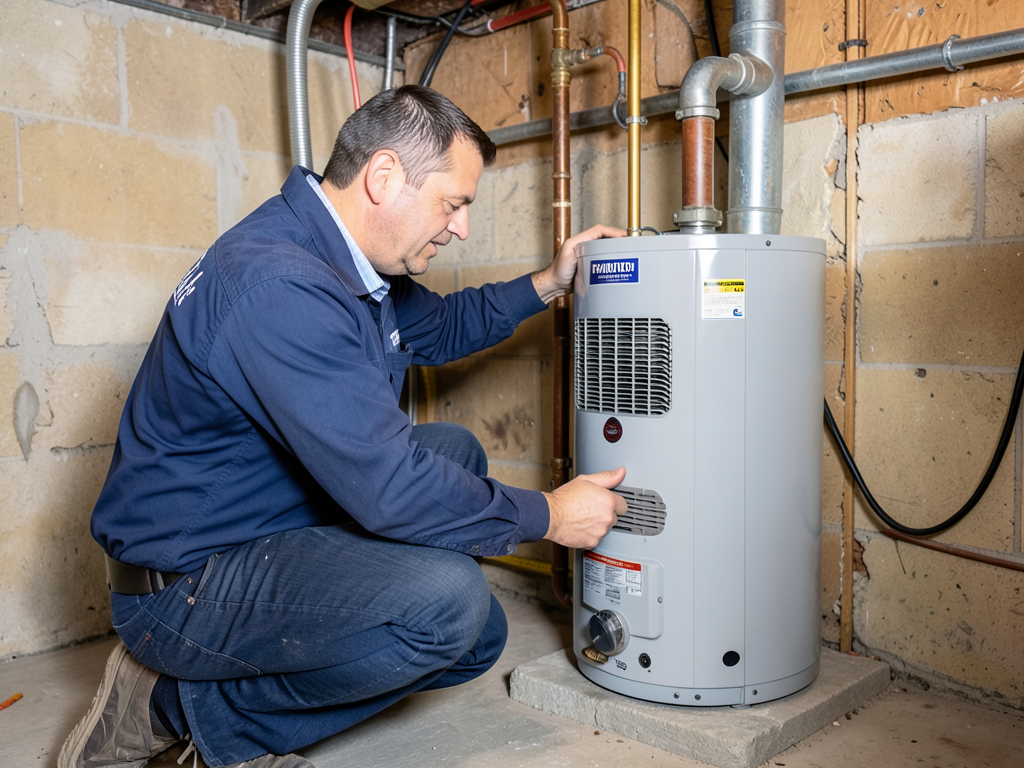







Pittsburgh's municipal water supply contains elevated levels of calcium and magnesium, creating moderately hard water throughout Allegheny County. This mineral content precipitates out inside water heater tanks as the water heats, forming sediment layers on the tank bottom. The sediment acts as insulation between the heating element or burner and the water, forcing the system to run longer cycles to reach target temperature. The extra heat exposure accelerates corrosion of the tank lining and anode rod. In neighborhoods with older galvanized supply lines, iron particles add to the sediment load. The combination of hard water and aging distribution infrastructure means Pittsburgh water heaters accumulate damaging deposits faster than units in soft water regions. Regular flushing extends tank life, but most homeowners skip this maintenance until a failure forces an emergency call for 24 hour water heater repair.
Many Pittsburgh homes were built between 1920 and 1960, during an era when water heaters were considered utility appliances requiring minimal maintenance. Basements in these properties often lack proper drainage or sump pump systems, meaning a ruptured water heater tank can cause thousands of dollars in flood damage before the homeowner notices. Local plumbing codes now require catch pans under water heaters in finished basement installations, but older homes remain grandfathered under previous standards. Ace Plumbing Pittsburgh technicians understand these local construction patterns and building code requirements. We factor in your home's age, basement configuration, and water supply characteristics when recommending repair versus replacement. Our familiarity with Pittsburgh's housing stock and infrastructure challenges means we provide solutions tailored to the specific conditions in your neighborhood, not generic advice that ignores local realities.