




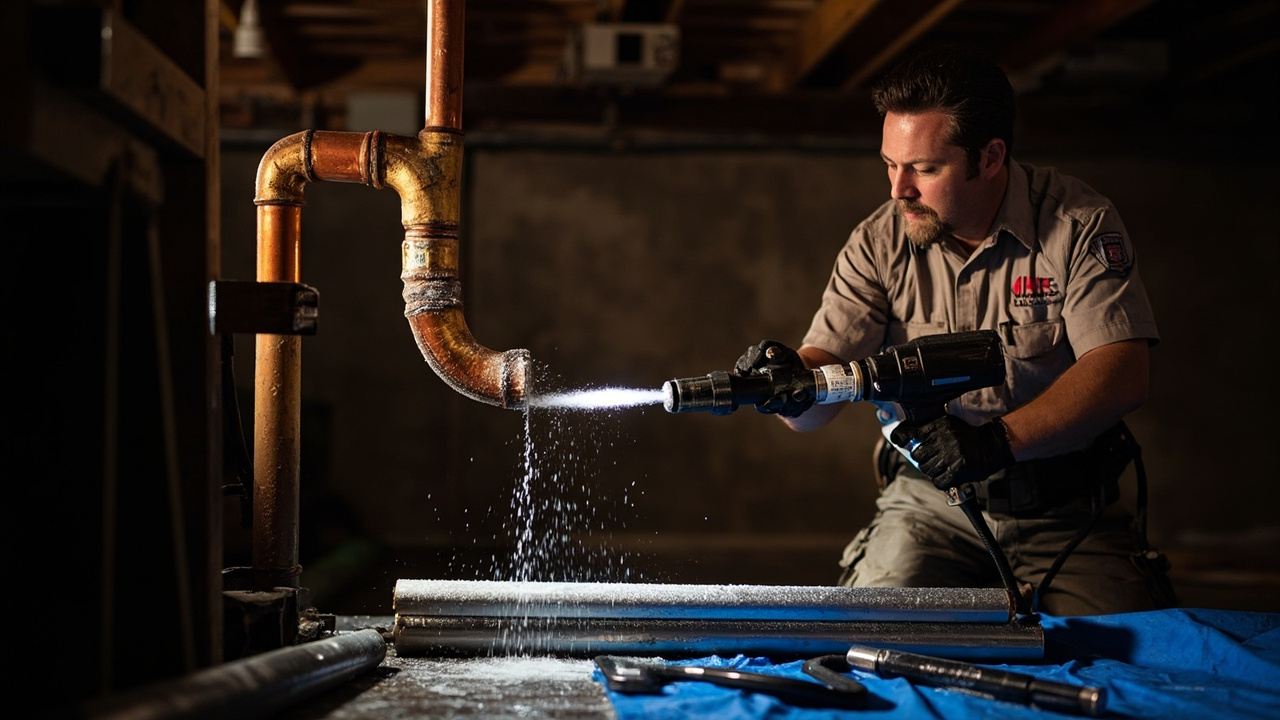


Pittsburgh experiences dangerous freeze-thaw cycling throughout winter. Temperatures swing from below 15°F overnight to above 40°F during the day, especially in January and February. This pattern is devastating for plumbing because pipes freeze overnight, partially thaw during the day, then refreeze harder the next night. Each cycle expands and contracts pipe walls, creating micro-fractures in copper and stress cracks in PEX. Homes built into hillsides in neighborhoods like Squirrel Hill and Mount Washington face additional risk because foundation walls on the downhill side are exposed to wind and low temperatures while uphill walls stay warmer. Uneven freeze exposure creates pressure differentials that burst pipes at joints and bends. Professional pipe thawing services understand these local patterns and know which pipe sections fail first.
Pittsburgh's housing stock includes thousands of pre-1960 homes with galvanized steel supply lines and minimal crawlspace insulation. Local building codes have evolved, but older properties were not built for the temperature extremes we experience now. Choosing a local plumbing team means working with technicians who have thawed pipes in your exact neighborhood, understand your home's construction era, and know where builder shortcuts created freeze vulnerabilities. We have worked in every Pittsburgh zip code and recognize the difference between a South Side row house freeze and a North Hills ranch freeze. That experience translates to faster diagnosis, better repairs, and prevention strategies that actually work in your specific property type.