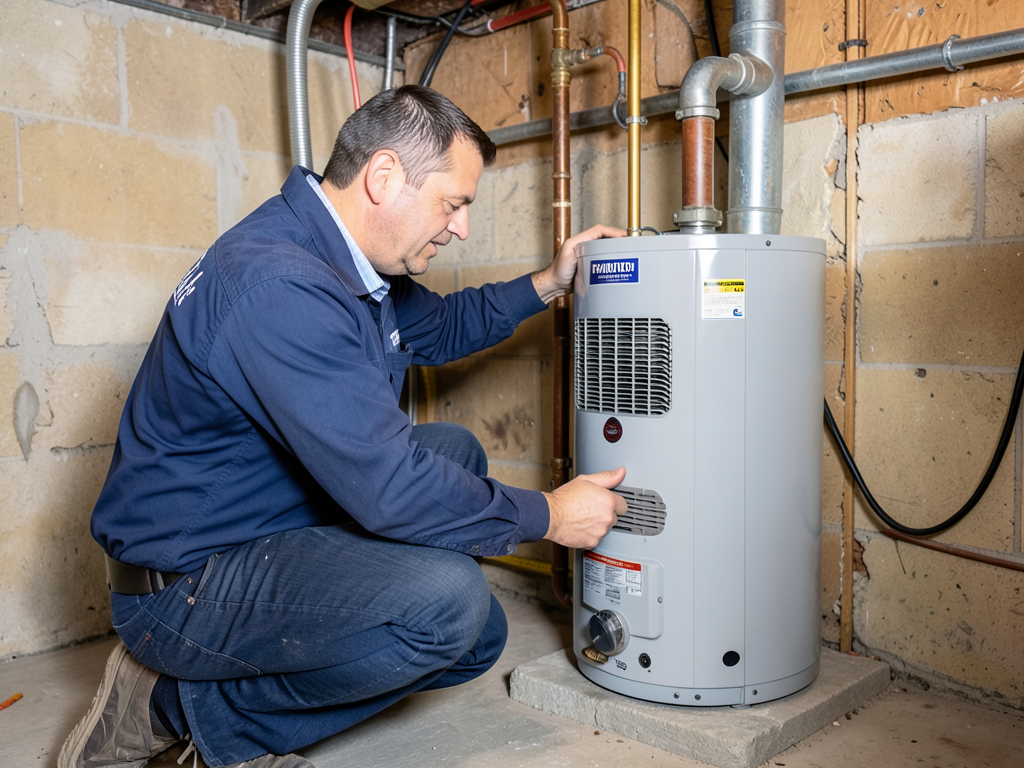







Pittsburgh's municipal water contains dissolved minerals including calcium and magnesium that precipitate when heated. This creates scale buildup that accumulates faster in tankless heat exchangers than in storage tanks due to the higher heat concentration required for instantaneous heating. Homes in areas like Mount Washington and Brookline, where older cast iron mains add iron content to the supply, face accelerated fouling in both system types. The storage vs instantaneous water heater decision must account for maintenance frequency, as tankless units require annual professional descaling while storage tanks need sediment flushing every 6 to 12 months. Our water hardness makes maintenance non-optional regardless of which technology you choose.
Allegheny County enforces specific codes for water heater installations that differ from surrounding counties. Gas-fired equipment requires CO detectors within 15 feet, proper combustion air provisions, and specific venting materials based on appliance efficiency ratings. We maintain relationships with local inspectors who know our work meets standards consistently. This familiarity speeds approval processes and prevents installation delays common when inspectors encounter unfamiliar contractors. Choosing a plumber experienced with Pittsburgh's specific requirements eliminates the risk of failed inspections that leave you without hot water while corrections are made.