
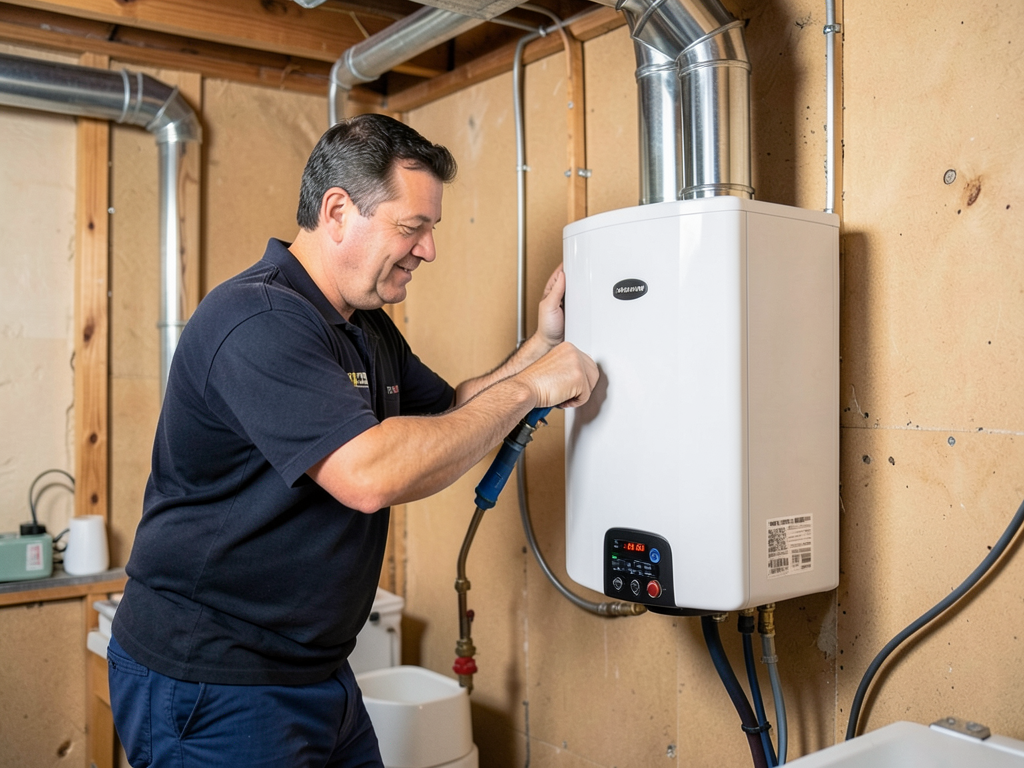
Deciding between a traditional tank and a tankless water heater for your Gibsonia home
Choosing the right water heater for your Gibsonia home means weighing upfront costs against long-term efficiency and reliability. Traditional tank water heaters store hot water in a large insulated tank while tankless models heat water on demand. Both systems have distinct advantages depending on your household size, water usage patterns, and home layout. Gibsonia’s cold winter groundwater temperatures affect how efficiently each system operates making local expertise essential for making the right choice. The Best Local Plumbers in Mt. Lebanon for Fast Water Heater Repair.
Understanding the core differences between tank and tankless systems
Traditional tank water heaters typically hold 40 to 80 gallons of hot water and maintain that temperature 24/7. They cost less upfront but consume more energy keeping water hot when not in use. Tankless water heaters heat water instantly as it flows through the unit eliminating standby heat loss. They provide unlimited hot water but require higher gas line capacity and proper venting. Energy Efficient Tankless Water Heater Installation in Wexford.
Gibsonia homes built before 1990 often have 1/2-inch gas lines that cannot support tankless units without costly upgrades. The Pennsylvania Uniform Construction Code requires 3/4-inch gas lines for most tankless installations. This hidden cost surprises many homeowners who assume they can simply swap out their old tank for a new tankless system. Pennsylvania Uniform Construction Code.
Why Gibsonia’s groundwater temperature affects your decision
Western Pennsylvania’s cold winters mean Gibsonia’s groundwater enters homes at approximately 48 to 52 degrees Fahrenheit during winter months. Tankless water heaters must raise this temperature by 60 to 70 degrees to reach the standard 110 to 120-degree shower temperature. This temperature rise requires significant BTU output.. Read more about Why your shower temperature keeps changing when someone flushes the toilet.
A typical 5 GPM tankless unit needs 150000 to 200000 BTUs to maintain flow during winter. Traditional tanks use electric or gas heating elements continuously but do not face the same winter performance limitations. Gibsonia’s older homes with galvanized pipes often experience mineral buildup that further reduces tankless efficiency by restricting water flow.. Read more about How to safely shut off your gas line during a Pittsburgh home emergency.
Cost comparison for Gibsonia homeowners
| Feature | Traditional Tank | Tankless |
|---|---|---|
| Upfront Cost | $1200 – $2500 | $2500 – $4500 |
| Installation | 4-6 hours | 6-10 hours |
| Gas Line Upgrade | Rarely needed | Often required |
| Annual Energy Cost | $300 – $450 | $200 – $350 |
| Lifespan | 10-12 years | 20+ years |
| Space Required | 5′ x 2′ footprint | Wall-mounted saves space |
Gibsonia homes in the 15044 zip code area typically see 12 to 15 years of reliable service from traditional tanks before replacement becomes necessary. Tankless units installed in Gibsonia often last 20+ years with proper maintenance though hard water scale can reduce efficiency by 25% within five years without annual flushing.
Installation considerations for Gibsonia’s older homes
Many Gibsonia homes built in the 1970s and 1980s have basements with limited venting options. Tankless units require Category III stainless steel venting for gas models which must terminate through a sidewall or roof. This can be challenging in finished basements where exterior wall access is limited.
The Allegheny County Health Department requires permits for all water heater replacements with tankless installations requiring additional inspections for gas line modifications and venting. Homes near the North Park area often need electrical panel upgrades to handle the 120-volt power requirements of modern tankless controls. Allegheny County Health Department.
Traditional tanks can typically use existing B-vent or direct vent systems making replacement faster and less expensive. However older tanks installed before 1990 may contain asbestos insulation requiring professional abatement during removal.
Performance factors that matter in Gibsonia
Gibsonia families with three or more bathrooms often find tankless systems struggle during simultaneous use. A 5 GPM tankless unit provides enough hot water for two showers running simultaneously but three showers plus a dishwasher can overwhelm the system. Traditional 75-gallon tanks handle multiple simultaneous uses better.
Hard water from the Pittsburgh Water and Sewer Authority supply contains calcium and magnesium that create scale inside tankless heat exchangers. This scale reduces efficiency by 1 to 2% annually without proper maintenance. Gibsonia homeowners who skip annual descaling often experience flow rate drops of 30% within three years. Pittsburgh Backflow Testing and Certification for Local Business Owners.
Traditional tanks also suffer from sediment buildup but at a slower rate. Gibsonia’s older neighborhoods with cast iron supply pipes often have higher sediment levels that accelerate tank deterioration. The 15044 area sees more frequent tank failures due to sediment-related overheating of lower heating elements.
Energy efficiency and operating costs
Energy Factor ratings measure water heater efficiency. Traditional tanks achieve 0.60 to 0.70 EF ratings while high-efficiency tankless units reach 0.94 to 0.98 EF. This means tankless units waste less energy but Gibsonia’s cold groundwater requires more energy input to achieve desired temperatures.
Based on Pennsylvania’s average electricity rate of $0.13 per kWh and natural gas rate of $1.25 per therm Gibsonia homeowners using natural gas see annual operating costs of $250 to $400 for tankless versus $350 to $500 for traditional tanks. Electric rates make traditional electric tanks significantly more expensive to operate.
Federal tax credits under Section 25C of the Internal Revenue Code provide up to $300 for qualifying tankless water heaters with EF ratings above 0.82. Local utility companies like Columbia Gas sometimes offer additional rebates of $100 to $200 for high-efficiency installations in Gibsonia.
Maintenance requirements and longevity
Tankless water heaters require annual maintenance including heat exchanger flushing inlet filter cleaning and combustion chamber inspection. Gibsonia’s hard water necessitates descaling every 12 to 18 months using food-grade citric acid solutions. Skipping maintenance voids most manufacturer warranties. Grease Trap Cleaning & Pumping.
Traditional tanks need less frequent maintenance but require anode rod replacement every 3 to 5 years to prevent internal corrosion. Gibsonia homes with water softeners can extend anode rod life to 5 to 7 years. Tankless units never need anode rods but do require electronic control board replacements every 10 to 15 years.
Scale buildup in tankless units creates hot spots that can crack heat exchangers. Gibsonia homeowners who notice reduced hot water temperature or unusual whistling sounds should schedule immediate professional inspection. These symptoms indicate scale accumulation that requires professional cleaning.
Space and installation flexibility
Tankless water heaters mount on walls and free up floor space making them ideal for Gibsonia homes with small mechanical rooms or finished basements where space is at a premium. A typical tankless unit measures 20 inches high by 14 inches wide by 9 inches deep.
Traditional tanks require 6 to 7 feet of vertical clearance and cannot be installed in attics due to weight and seismic strapping requirements. Gibsonia homes with crawl spaces often cannot accommodate traditional tanks making tankless the only viable option for some properties.
Point-of-use tankless units installed near bathrooms eliminate wait times for hot water and reduce waste. Gibsonia homeowners remodeling master bathrooms often add 2 to 3 GPM point-of-use units to supplement their main water heater.
Making the right choice for your Gibsonia home
Choose a traditional tank if you have a large family with simultaneous hot water needs want the lowest upfront cost or have an older home with limited gas line capacity. Traditional tanks work best for Gibsonia homes with 2.5 or more bathrooms where multiple showers run simultaneously.
Select a tankless system if you prioritize energy efficiency have limited space plan to stay in your home long-term or want endless hot water for smaller households. Tankless units excel in Gibsonia condos townhomes and smaller single-family homes with 1 to 2 bathrooms.
Consider a hybrid approach with a traditional tank for main bathrooms and point-of-use tankless units for remote locations like master bathrooms or kitchen sinks. This combination provides both capacity and efficiency while minimizing installation costs.
Local regulations and permit requirements
The Allegheny County Health Department requires permits for all water heater replacements in Gibsonia. Tankless installations need additional permits for gas line modifications and venting changes. Permit fees range from $75 to $150 depending on the scope of work.
Pennsylvania’s Uniform Construction Code Section 403.3 mandates seismic strapping for all water heaters with specific requirements for strap spacing and attachment methods. Gibsonia homes in the North Park area must also comply with floodplain elevation requirements that affect mechanical equipment placement.
Local building codes require temperature and pressure relief valves on all water heaters with discharge pipes terminating within 6 inches of floor level. Tankless units need additional safety features including freeze protection in unconditioned spaces.
Frequently Asked Questions
How long does it take to recoup the higher cost of a tankless water heater?
Most Gibsonia homeowners recover the additional $1000 to $2000 investment in 5 to 7 years through energy savings and longer lifespan. Factors affecting payback include household size water usage patterns and local utility rates.
Can I install a tankless water heater myself?
Pennsylvania law requires licensed plumbers to install water heaters. Tankless units involve gas line modifications high-voltage electrical connections and proper venting that require professional expertise. DIY installation voids warranties and may create safety hazards.
What size tankless water heater do I need for my Gibsonia home?
Size depends on simultaneous hot water demand and groundwater temperature. A 5 GPM unit handles two showers and a sink. Gibsonia’s cold groundwater may require 6 to 8 GPM capacity for larger homes. Professional sizing calculations prevent undersized installations.
Do tankless water heaters work during power outages?
Gas tankless units require electricity for controls and ignition so they do not work during outages. Traditional tanks maintain hot water for several hours after power loss. Battery backup systems can provide limited operation for tankless units.
How often should I flush my tankless water heater?
Annual flushing is recommended for all tankless units. Gibsonia’s hard water requires descaling every 12 to 18 months. Homes with water softeners can extend service intervals to every 24 months. Skipping maintenance reduces efficiency and voids warranties.
Ready to upgrade your Gibsonia water heater?
Making the right water heater choice affects your comfort and utility bills for years to come. Gibsonia’s unique climate and infrastructure require careful consideration of both tank and tankless options. Professional assessment of your home’s gas lines venting and hot water demand ensures you select the system that best meets your needs.
Call (412) 382-8366 today to schedule your free water heater consultation. Our Gibsonia plumbing experts will evaluate your current system discuss your hot water needs and provide clear recommendations with upfront pricing. Don’t wait until your old water heater fails – plan your upgrade now and enjoy reliable hot water for years to come. Emergency 24 Hour Plumbing Services in the Bloomfield Area.
{
“@context”: “https://schema.org”,
“@type”: “BlogPosting”,
“headline”: “Deciding between a traditional tank and a tankless water heater for your Gibsonia home”,
“description”: “Compare traditional tank and tankless water heaters for Gibsonia homes. Learn about costs, installation, and local factors affecting your choice.”,
“wordCount”: 1761,
“datePublished”: “2026-03-11T10:11:00.000Z”,
“dateModified”: “2026-03-11T10:11:00.000Z”,
“inLanguage”: “en-US”,
“mainEntityOfPage”: {
“@type”: “WebPage”,
“@id”: “https://aceplumbingpittsburgh.com”
},
“publisher”: {
“@type”: “LocalBusiness”,
“name”: “Ace Plumbing Pittsburgh”,
“url”: “https://aceplumbingpittsburgh.com”
},
“author”: {
“@type”: “Organization”,
“name”: “Ace Plumbing Pittsburgh”,
“url”: “https://aceplumbingpittsburgh.com”
},
“image”: {
“@type”: “ImageObject”,
“url”: “https://aceplumbingpittsburgh.com/wp-content/uploads/2026/03/deciding-between-a-traditional-tank-and-a-tankless-1.png”
}
}
{
“@context”: “https://schema.org”,
“@type”: “Plumber”,
“name”: “Ace Plumbing Pittsburgh”,
“url”: “https://aceplumbingpittsburgh.com”,
“address”: {
“@type”: “PostalAddress”,
“addressLocality”: “Pittsburgh”
},
“areaServed”: {
“@type”: “City”,
“name”: “Pittsburgh”
}
}
{
“@context”: “https://schema.org”,
“@type”: “FAQPage”,
“mainEntity”: [
{
“@type”: “Question”,
“name”: “How long does it take to recoup the higher cost of a tankless water heater?”,
“acceptedAnswer”: {
“@type”: “Answer”,
“text”: “Most Gibsonia homeowners recover the additional $1000 to $2000 investment in 5 to 7 years through energy savings and longer lifespan. Factors affecting payback include household size water usage patterns and local utility rates.”
}
},
{
“@type”: “Question”,
“name”: “Can I install a tankless water heater myself?”,
“acceptedAnswer”: {
“@type”: “Answer”,
“text”: “Pennsylvania law requires licensed plumbers to install water heaters. Tankless units involve gas line modifications high-voltage electrical connections and proper venting that require professional expertise. DIY installation voids warranties and may create safety hazards.”
}
},
{
“@type”: “Question”,
“name”: “What size tankless water heater do I need for my Gibsonia home?”,
“acceptedAnswer”: {
“@type”: “Answer”,
“text”: “Size depends on simultaneous hot water demand and groundwater temperature. A 5 GPM unit handles two showers and a sink. Gibsonia’s cold groundwater may require 6 to 8 GPM capacity for larger homes. Professional sizing calculations prevent undersized installations.”
}
},
{
“@type”: “Question”,
“name”: “Do tankless water heaters work during power outages?”,
“acceptedAnswer”: {
“@type”: “Answer”,
“text”: “Gas tankless units require electricity for controls and ignition so they do not work during outages. Traditional tanks maintain hot water for several hours after power loss. Battery backup systems can provide limited operation for tankless units.”
}
},
{
“@type”: “Question”,
“name”: “How often should I flush my tankless water heater?”,
“acceptedAnswer”: {
“@type”: “Answer”,
“text”: “Annual flushing is recommended for all tankless units. Gibsonia’s hard water requires descaling every 12 to 18 months. Homes with water softeners can extend service intervals to every 24 months. Skipping maintenance reduces efficiency and voids warranties.”
}
},
{
“@type”: “Question”,
“name”: “Ready to upgrade your Gibsonia water heater?”,
“acceptedAnswer”: {
“@type”: “Answer”,
“text”: “Making the right water heater choice affects your comfort and utility bills for years to come. Gibsonia’s unique climate and infrastructure require careful consideration of both tank and tankless options. Professional assessment of your home’s gas lines venting and hot water demand ensures you select the system that best meets your needs.”
}
}
]
}
{
“@context”: “https://schema.org”,
“@type”: “BreadcrumbList”,
“itemListElement”: [
{
“@type”: “ListItem”,
“position”: 1,
“name”: “Home”,
“item”: “https://aceplumbingpittsburgh.com”
},
{
“@type”: “ListItem”,
“position”: 2,
“name”: “Blog”,
“item”: “https://aceplumbingpittsburgh.com/blog”
},
{
“@type”: “ListItem”,
“position”: 3,
“name”: “Deciding between a traditional tank and a tankless water heater for your Gibsonia home”
}
]
}
{
“@context”: “https://schema.org”,
“@type”: “Service”,
“serviceType”: “Plumbing”,
“provider”: {
“@type”: “LocalBusiness”,
“name”: “Ace Plumbing Pittsburgh”,
“url”: “https://aceplumbingpittsburgh.com”
},
“areaServed”: {
“@type”: “City”,
“name”: “Pittsburgh”
},
“description”: “Compare traditional tank and tankless water heaters for Gibsonia homes. Learn about costs, installation, and local factors affecting your choice.”
}