
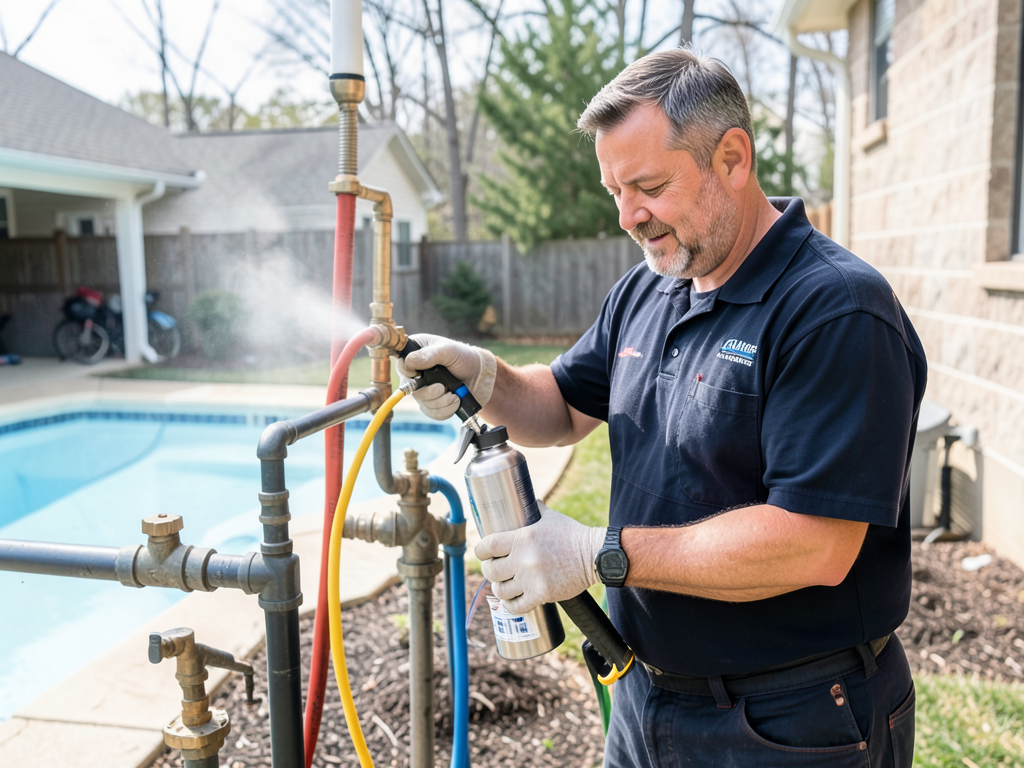
Preparing your Marshall Township pool house plumbing for a long Pittsburgh winter
Winter in Marshall Township brings deep freezes that can turn your pool house plumbing into a disaster zone. When temperatures drop below 20°F for extended periods, water left in pipes expands and cracks fittings. The cost of winterizing your pool house now is far less than the $5,000+ repair bill from burst pipes in March. EPA guidelines.
The freeze-thaw cycles common to Allegheny County create unique risks for pool houses. Unlike your main home, these structures often have minimal insulation and are used only seasonally. Water trapped in PEX lines, copper pipes, or outdoor shower fixtures can freeze solid within hours when a cold front moves through. No Hot Water Diagnosis.
- Shut Off Main Water Supply
Locate the shut-off valve near your pool house or at the main meter. Turn it clockwise until fully closed. Open all faucets to relieve pressure.
- Drain All Fixtures
Open every sink, shower, and toilet valve. Flush toilets repeatedly until tanks are empty. Leave drain plugs out of sinks and showers.
- Blow Out Water Lines
Connect an air compressor to the main line using a blowout plug. Apply 40-60 PSI air pressure to push remaining water through fixtures. Start with closest fixtures and work outward.
- Add Non-Toxic RV Antifreeze
Pour one gallon of propylene glycol antifreeze into each P-trap under sinks and showers. Add two gallons to toilet bowls and tanks. This prevents standing water from freezing.
- Protect Water Heaters
For tankless units, turn off power and gas. Drain the heat exchanger following manufacturer instructions. For traditional tanks, drain completely and leave the drain valve open.
Marshall Township’s frost line extends 36 inches below grade, deeper than many pool house supply lines are buried. This creates a perfect storm for freeze damage when soil temperatures plummet in January. The area’s rolling terrain also means some pool houses sit in cold air pockets where temperatures run 5-10°F colder than surrounding areas.
Pool house plumbing faces specific vulnerabilities that standard home winterization doesn’t address. Outdoor showers with mixing valves contain small water pockets that freeze first. Kitchenettes with under-counter water heaters trap water in heat exchangers. Even PEX piping, which resists bursting better than copper, can develop pinhole leaks when ice crystals form inside. Emergency 24 Hour Plumbing Services in the Bloomfield Area.
The sound of water hammer when you turn off a valve in winter indicates water is still trapped in the line. That trapped water will freeze overnight and potentially split the pipe by morning. The smell of damp earth near your pool house foundation in winter often means a slow leak from a frozen pipe that thawed and started dripping.
Professional winterization includes pressure testing your system before the first freeze. A technician connects a test gauge and pressurizes lines to 80 PSI. If pressure drops over 15 minutes, you have a leak that needs repair before winterizing. This diagnostic step prevents surprises when you reopen in spring.
DIY winterization carries risks if you skip the blowout step. Gravity draining leaves 1-2 cups of water in horizontal pipe runs. When that water freezes, it expands and cracks the pipe at its weakest point. The first sign is often a small drip that turns into a flood when you turn water back on in April.
Marshall Township’s location in the Allegheny Plateau means winter winds can gust to 40+ MPH. These winds create wind chill factors that make 25°F feel like 10°F on exposed plumbing. Pool houses with large windows or glass doors lose heat rapidly, dropping interior temperatures below freezing even when the main house stays warm.
The Allegheny County Health Department plumbing code requires all exterior plumbing to be protected from freezing. For pool houses, this means either burying supply lines below the frost line or installing heat tape on exposed pipes. Heat tape must be thermostatically controlled and UL-listed for the application.. Read more about Everything you need to know about installing a rain barrel for your Highland Park garden.
RV antifreeze differs from automotive antifreeze in critical ways. Propylene glycol, used in RV antifreeze, is non-toxic and safe for plumbing systems. Ethylene glycol, found in car antifreeze, is highly toxic and will contaminate your entire water system if used accidentally. The blue color of RV antifreeze helps you see when lines are fully protected.
Pool house toilets require special attention because their tanks and bowls hold several gallons of water. Simply draining the tank leaves water in the bowl trap. Adding antifreeze to both locations prevents the porcelain from cracking due to freeze expansion. The antifreeze also lubricates seals that might dry out during winter storage.
Outdoor shower valves contain check valves and mixing chambers that trap water. Even when you open the valve, small water pockets remain. Compressed air must be blown through these fixtures for at least 30 seconds per handle to ensure complete evacuation. The sound of air hissing from the showerhead confirms the line is clear.
Kitchenette sinks in pool houses often have garbage disposals connected to the drain. These units contain motors with water jackets that can freeze and crack. Running antifreeze through the disposal while it’s running ensures the entire unit is protected. The grinding sound confirms the antifreeze is circulating through the system.
Pool house water heaters, whether tank or tankless, require different winterization approaches. Tankless units have heat exchangers that can crack if water freezes inside. Most manufacturers recommend complete drainage and isolation from the water supply. Traditional tanks should be drained and left with the drain valve open to prevent vacuum formation.
The timing of winterization matters in Marshall Township. Waiting until the first hard freeze means you’re working in freezing conditions. Professional plumbers recommend scheduling winterization service by mid-October when overnight temperatures consistently drop below 40°F but before the first freeze. This gives you a 3-4 week window for scheduling. The Best Local Plumbers in Mt. Lebanon for Fast Water Heater Repair.
Pool house plumbing materials react differently to freezing. Copper pipes split cleanly when frozen, creating obvious breaks. PEX pipes may develop microscopic cracks that leak slowly when thawed. PVC becomes brittle in cold and can shatter under pressure. Knowing your pipe material helps diagnose problems when reopening in spring. Dealing With Old Pipe Problems in Historic Shadyside Homes.
Backflow preventers on pool house irrigation systems need winterization too. These devices contain springs and rubber seals that freeze easily. Most require removal and indoor storage during winter. The sound of water dripping from a backflow preventer in winter indicates trapped water that will freeze and damage internal components. Pittsburgh Backflow Testing and Certification for Local Business Owners.
Pool house plumbing systems often have air chambers that cushion water hammer. These vertical pipes trap air and water. When water freezes in these chambers, it expands and can burst the chamber at the top. Blowing compressed air through the system ensures these air chambers are completely dry.
The cost of professional winterization averages $200-300 for a typical pool house. This includes system inspection, complete draining, blowout service, and antifreeze application. Compare this to the $3,000-5,000 cost of repairing freeze-damaged plumbing, plus the expense of water damage to floors, walls, and equipment.
DIY winterization requires specific tools: an air compressor capable of 60 PSI continuous output, blowout plugs for various fixtures, and non-toxic RV antifreeze. Most homeowners lack the proper fittings to connect to pool house plumbing. Professional plumbers carry specialized adapters that fit any fixture configuration.
Pool house plumbing failures often occur in March when daytime temperatures rise above freezing but nights remain cold. This freeze-thaw cycle is particularly damaging because ice melts during the day and refreezes at night, expanding cracks each cycle. A pipe that survives December might fail in March’s yo-yo temperatures.
Professional winterization includes documentation of the system’s condition. Technicians photograph accessible plumbing, note any corrosion or wear, and provide recommendations for repairs before the next season. This baseline helps you track plumbing health over time and budget for replacements before failures occur.
Pool house plumbing near foundations faces additional risks. Foundation cracks allow cold air to circulate around pipes. Even pipes buried below grade can freeze if cold air moves through foundation gaps. Sealing these gaps with foam insulation adds protection beyond pipe winterization.
Frequently Asked Questions
When should I winterize my Marshall Township pool house plumbing?
Schedule winterization by mid-October before the first hard freeze. Watch for overnight temperatures consistently below 40°F as your trigger to call for service.
Can I use regular antifreeze in my pool house plumbing?
No. Only use non-toxic RV antifreeze made with propylene glycol. Automotive antifreeze contains ethylene glycol which is poisonous and will contaminate your water system.
How do I know if my pool house pipes are already damaged?
Look for water stains on ceilings or walls below plumbing runs. Check for damp spots on the floor near fixtures. Listen for hissing sounds from pipes when the system is pressurized.
What’s the difference between blowing out lines and just draining them?
Draining removes most water but leaves small amounts in low spots and fixtures. Blowing out uses compressed air to push every drop out of the system, preventing freeze damage.
Should I turn off the electricity to my pool house during winter?
Keep minimal power for security systems and freeze sensors. However, turn off breakers for water heaters, pumps, and other devices that could fail and cause damage.
How long does professional winterization take?
Most pool houses require 2-3 hours for complete winterization. Complex systems with multiple fixtures or specialized equipment may take longer.
What happens if I forget to winterize one year?
You risk burst pipes, water damage, and mold growth. Even one freeze night can cause thousands in damage. Some insurance policies may not cover damage from neglect.
Can I just leave the heat on in my pool house instead of winterizing?
Heating is unreliable during power outages and costs significantly more than winterization. A single thermostat failure can result in frozen pipes despite the heat being on.
Do I need to winterize my pool house irrigation system separately?
Yes. Irrigation systems have separate supply lines and require their own blowout service. Many pool houses have integrated irrigation that needs coordinated winterization.
How much does it cost to repair frozen pool house plumbing?
Repair costs typically range from $1,500 to $5,000 depending on damage extent. This doesn’t include water damage repairs to floors, walls, and equipment.
Don’t wait until the first freeze to protect your pool house plumbing. The peace of mind from professional winterization is worth every penny. Call (412) 382-8366 today to schedule your Marshall Township pool house winterization service before Pittsburgh’s winter arrives. For more information, visit FEMA winter preparedness.
{
“@context”: “https://schema.org”,
“@type”: “BlogPosting”,
“headline”: “Preparing your Marshall Township pool house plumbing for a long Pittsburgh winter”,
“description”: “Protect your Marshall Township pool house from costly freeze damage this winter. Learn how to drain lines, blow out pipes, and add antifreeze before Pittsburgh’s deep freeze hits.”,
“wordCount”: 1776,
“datePublished”: “2026-05-27T12:30:00.000Z”,
“dateModified”: “2026-05-27T12:30:00.000Z”,
“inLanguage”: “en-US”,
“mainEntityOfPage”: {
“@type”: “WebPage”,
“@id”: “https://aceplumbingpittsburgh.com”
},
“publisher”: {
“@type”: “LocalBusiness”,
“name”: “Ace Plumbing Pittsburgh”,
“url”: “https://aceplumbingpittsburgh.com”
},
“author”: {
“@type”: “Organization”,
“name”: “Ace Plumbing Pittsburgh”,
“url”: “https://aceplumbingpittsburgh.com”
},
“image”: {
“@type”: “ImageObject”,
“url”: “https://aceplumbingpittsburgh.com/wp-content/uploads/2026/03/preparing-your-marshall-township-pool-house-plumbi-1.png”
}
}
{
“@context”: “https://schema.org”,
“@type”: “Plumber”,
“name”: “Ace Plumbing Pittsburgh”,
“url”: “https://aceplumbingpittsburgh.com”,
“address”: {
“@type”: “PostalAddress”,
“addressLocality”: “Pittsburgh”
},
“areaServed”: {
“@type”: “City”,
“name”: “Pittsburgh”
}
}
{
“@context”: “https://schema.org”,
“@type”: “FAQPage”,
“mainEntity”: [
{
“@type”: “Question”,
“name”: “When should I winterize my Marshall Township pool house plumbing?”,
“acceptedAnswer”: {
“@type”: “Answer”,
“text”: “Schedule winterization by mid-October before the first hard freeze. Watch for overnight temperatures consistently below 40°F as your trigger to call for service.”
}
},
{
“@type”: “Question”,
“name”: “Can I use regular antifreeze in my pool house plumbing?”,
“acceptedAnswer”: {
“@type”: “Answer”,
“text”: “No. Only use non-toxic RV antifreeze made with propylene glycol. Automotive antifreeze contains ethylene glycol which is poisonous and will contaminate your water system.”
}
},
{
“@type”: “Question”,
“name”: “What’s the difference between blowing out lines and just draining them?”,
“acceptedAnswer”: {
“@type”: “Answer”,
“text”: “Draining removes most water but leaves small amounts in low spots and fixtures. Blowing out uses compressed air to push every drop out of the system, preventing freeze damage.”
}
},
{
“@type”: “Question”,
“name”: “Should I turn off the electricity to my pool house during winter?”,
“acceptedAnswer”: {
“@type”: “Answer”,
“text”: “Keep minimal power for security systems and freeze sensors. However, turn off breakers for water heaters, pumps, and other devices that could fail and cause damage.”
}
},
{
“@type”: “Question”,
“name”: “How long does professional winterization take?”,
“acceptedAnswer”: {
“@type”: “Answer”,
“text”: “Most pool houses require 2-3 hours for complete winterization. Complex systems with multiple fixtures or specialized equipment may take longer.”
}
},
{
“@type”: “Question”,
“name”: “What happens if I forget to winterize one year?”,
“acceptedAnswer”: {
“@type”: “Answer”,
“text”: “You risk burst pipes, water damage, and mold growth. Even one freeze night can cause thousands in damage. Some insurance policies may not cover damage from neglect.”
}
},
{
“@type”: “Question”,
“name”: “Can I just leave the heat on in my pool house instead of winterizing?”,
“acceptedAnswer”: {
“@type”: “Answer”,
“text”: “Heating is unreliable during power outages and costs significantly more than winterization. A single thermostat failure can result in frozen pipes despite the heat being on.”
}
},
{
“@type”: “Question”,
“name”: “Do I need to winterize my pool house irrigation system separately?”,
“acceptedAnswer”: {
“@type”: “Answer”,
“text”: “Yes. Irrigation systems have separate supply lines and require their own blowout service. Many pool houses have integrated irrigation that needs coordinated winterization.”
}
},
{
“@type”: “Question”,
“name”: “How much does it cost to repair frozen pool house plumbing?”,
“acceptedAnswer”: {
“@type”: “Answer”,
“text”: “Repair costs typically range from $1,500 to $5,000 depending on damage extent. This doesn’t include water damage repairs to floors, walls, and equipment.”
}
}
]
}
{
“@context”: “https://schema.org”,
“@type”: “HowTo”,
“name”: “How to Winterize Pool House Plumbing”,
“step”: [
{
“@type”: “HowToStep”,
“position”: 1,
“name”: “Shut Off Main Water Supply”,
“text”: “Locate the shut-off valve near your pool house or at the main meter. Turn it clockwise until fully closed. Open all faucets to relieve pressure.”
},
{
“@type”: “HowToStep”,
“position”: 2,
“name”: “Drain All Fixtures”,
“text”: “Open every sink, shower, and toilet valve. Flush toilets repeatedly until tanks are empty. Leave drain plugs out of sinks and showers.”
},
{
“@type”: “HowToStep”,
“position”: 3,
“name”: “Blow Out Water Lines”,
“text”: “Connect an air compressor to the main line using a blowout plug. Apply 40-60 PSI air pressure to push remaining water through fixtures. Start with closest fixtures and work outward.”
},
{
“@type”: “HowToStep”,
“position”: 4,
“name”: “Add Non-Toxic RV Antifreeze”,
“text”: “Pour one gallon of propylene glycol antifreeze into each P-trap under sinks and showers. Add two gallons to toilet bowls and tanks. This prevents standing water from freezing.”
},
{
“@type”: “HowToStep”,
“position”: 5,
“name”: “Protect Water Heaters”,
“text”: “For tankless units, turn off power and gas. Drain the heat exchanger following manufacturer instructions. For traditional tanks, drain completely and leave the drain valve open.”
}
],
“image”: “https://aceplumbingpittsburgh.com/wp-content/uploads/2026/03/preparing-your-marshall-township-pool-house-plumbi-1.png”
}
{
“@context”: “https://schema.org”,
“@type”: “BreadcrumbList”,
“itemListElement”: [
{
“@type”: “ListItem”,
“position”: 1,
“name”: “Home”,
“item”: “https://aceplumbingpittsburgh.com”
},
{
“@type”: “ListItem”,
“position”: 2,
“name”: “Blog”,
“item”: “https://aceplumbingpittsburgh.com/blog”
},
{
“@type”: “ListItem”,
“position”: 3,
“name”: “Preparing your Marshall Township pool house plumbing for a long Pittsburgh winter”
}
]
}
{
“@context”: “https://schema.org”,
“@type”: “Service”,
“serviceType”: “Plumbing”,
“provider”: {
“@type”: “LocalBusiness”,
“name”: “Ace Plumbing Pittsburgh”,
“url”: “https://aceplumbingpittsburgh.com”
},
“areaServed”: {
“@type”: “City”,
“name”: “Pittsburgh”
},
“description”: “Protect your Marshall Township pool house from costly freeze damage this winter. Learn how to drain lines, blow out pipes, and add antifreeze before Pittsburgh’s deep freeze hits.”
}