Simple steps to descale your tankless water heater in Sewickley Heights
Hard water in Sewickley Heights causes mineral buildup that reduces your tankless water heater’s efficiency and can lead to expensive repairs. The calcium and magnesium in Allegheny County’s water supply create scale deposits inside your unit’s heat exchanger, forcing it to work harder and shortening its lifespan. Descaling your system every 12-24 months keeps it running at peak performance and prevents the frustrating cold-water surprises many Pittsburgh homeowners experience during winter months. EPA WaterSense.
Why descaling matters in Pittsburgh
Pittsburgh’s water supply comes from the Allegheny River and contains high levels of dissolved minerals. The Allegheny County Sanitary Authority reports water hardness levels between 120-180 mg/L, which is considered moderately hard to hard. This mineral content creates scale buildup inside tankless water heaters at a rate 2-3 times faster than areas with softer water. Pittsburgh Backflow Testing and Certification for Local Business Owners.
Scale acts like insulation inside the heat exchanger, preventing efficient heat transfer. Your unit must run longer cycles to reach the desired temperature, increasing energy costs and putting stress on internal components. Over time, this can cause flow sensors to malfunction, error codes to appear, and ultimately complete system failure. Energy Efficient Tankless Water Heater Installation in Wexford.
Residents in Sewickley Heights and surrounding areas like Edgeworth and Sewickley Borough often notice the effects during peak usage times. When multiple showers run simultaneously, scale buildup can cause significant temperature fluctuations and reduced flow rates that make daily routines frustrating.
Signs your tankless heater needs descaling
Several warning signs indicate your system needs attention. The most common is the appearance of error codes on your unit’s display. Rinnai and Navien models often show LC (Lime Calcification) or 11 (Ignition Failure) codes when scale interferes with normal operation. These codes trigger automatically when the unit detects reduced efficiency or flow problems. Dealing With Old Pipe Problems in Historic Shadyside Homes.
Performance issues provide another clear signal. If your shower temperature fluctuates wildly when someone else uses water elsewhere in the house, scale buildup in the heat exchanger is likely the culprit. You might also notice reduced hot water pressure throughout your home, even when your main water pressure is normal.
Strange sounds coming from your tankless unit often indicate scale problems. As water flows through scaled passages, it creates popping or cracking noises from steam bubbles forming and collapsing. These sounds mean your system is working harder than necessary and may fail soon without maintenance.. Read more about Why a Reverse Osmosis System is the Best Way to Get Pure Drinking Water in Upper St. Clair.
Energy bills that creep up without explanation can also point to scale issues. When your heater must run longer cycles to achieve the same temperature, you’ll see the difference in your monthly utility costs. Many Sewickley Heights homeowners report 15-25% higher energy usage in units overdue for descaling.
Tools and supplies needed
Descaling requires specific equipment to do the job safely and effectively. You’ll need a submersible utility pump rated for continuous operation, typically 1/6 to 1/4 horsepower. This pump circulates the cleaning solution through your system at the proper flow rate.
Purchase 3-5 gallons of white vinegar or a commercial descaling solution designed for tankless water heaters. White vinegar works well for moderate buildup and costs less than specialized products. For severe scale, a phosphoric acid-based cleaner removes deposits more effectively but requires careful handling.
Two 5-foot food-grade hoses with 3/4-inch connections allow you to connect the pump between your unit’s isolation valves. These hoses must withstand the acidic solution without degrading. Include a bucket or container large enough to hold the cleaning solution and accommodate the pump.
Basic hand tools complete your kit. Adjustable wrenches help disconnect hoses, while a screwdriver assists with accessing service ports. Safety equipment includes chemical-resistant gloves and eye protection when handling descaling solutions.
Step-by-step descaling process
Turn off the power to your tankless water heater at the circuit breaker before beginning any work. For gas units, shut off the gas supply valve near the heater. This prevents accidental operation during the cleaning process and ensures your safety.
Close both isolation valves on your tankless unit. These valves, typically located on the cold water inlet and hot water outlet pipes, stop water flow into and out of the heater during cleaning. Some systems include service ports that make this process easier, while others require hose disconnection.
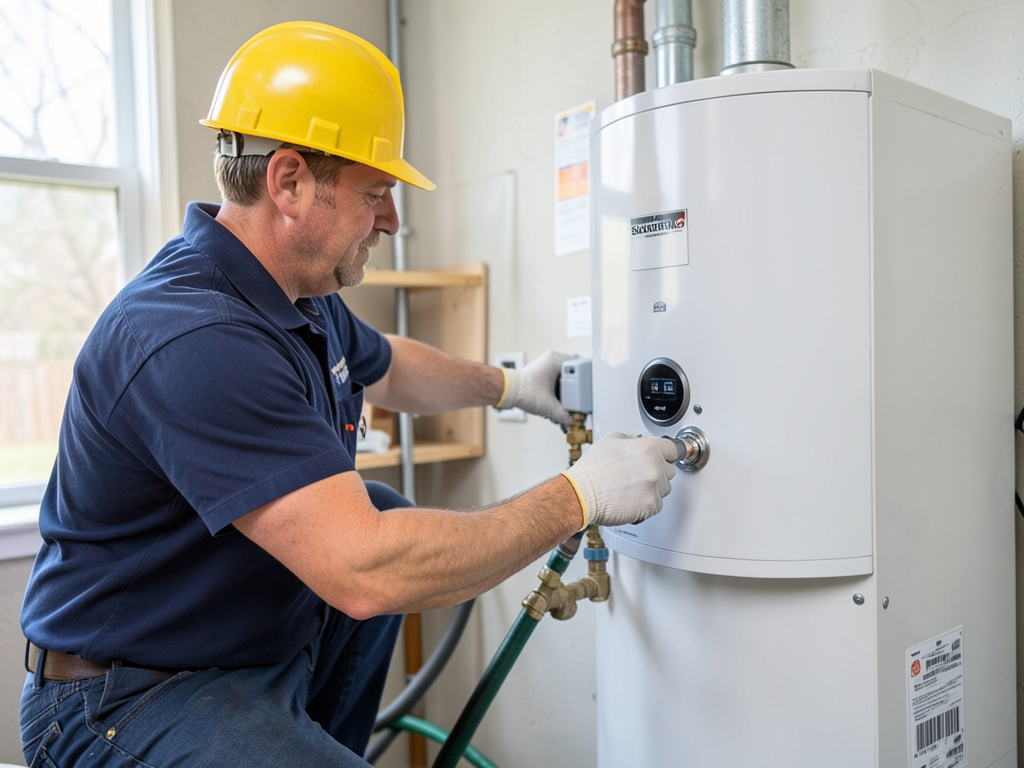
Connect one hose from the cold water isolation valve to the submersible pump. Place the pump in your bucket containing the descaling solution. Run the second hose from the hot water isolation valve back into the same bucket, creating a closed loop system.
Turn on the pump to circulate the cleaning solution through your tankless heater. The solution flows through the heat exchanger, dissolving mineral deposits. Let the pump run for 45-60 minutes for vinegar or 30-45 minutes for commercial descalers. The solution will turn cloudy as it removes scale.
After circulating, turn off the pump and disconnect the hoses. Open the isolation valves and run clean cold water through the system for 5-10 minutes to flush out all cleaning solution. This prevents any residual acid from damaging internal components or affecting water taste.
Restore power and gas service to your unit. Check for any error codes and verify normal operation. Your water heater should now deliver consistent temperatures and improved flow rates.
Professional vs. DIY: when to call a Pittsburgh plumber
DIY descaling works well for homeowners comfortable with basic plumbing tasks and those whose units show mild to moderate scale buildup. The process takes 2-3 hours and costs $30-50 in supplies versus $150-300 for professional service. However, several factors make professional service the better choice. Emergency 24 Hour Plumbing Services in the Bloomfield Area.
Warranty considerations often favor professional maintenance. Many manufacturers require documentation of professional servicing to honor warranty claims. A licensed plumber provides receipts and service records that protect your investment if major components fail later.
Complex installations present challenges for DIYers. Units mounted in tight spaces, those with non-standard plumbing configurations, or systems integrated with recirculation pumps require expertise to service properly. Incorrect valve operation or hose connections can damage sensitive components.
Emergency situations demand professional attention. If your unit displays persistent error codes, leaks water, or fails to operate after descaling attempts, continuing DIY efforts risks further damage. Professional plumbers carry diagnostic tools to identify underlying problems beyond simple scale buildup. The Best Local Plumbers in Mt. Lebanon for Fast Water Heater Repair.
Time constraints influence the decision for many busy Sewickley Heights families. Professional service typically completes in under an hour with guaranteed results. DIY projects often take longer, especially for first-time attempts, and may require multiple trips to purchase supplies.
Frequently Asked Questions
How often should I descale my tankless water heater?
Most Pittsburgh-area homes need descaling every 12-24 months depending on water hardness and household usage. Homes with water softeners may extend to 24-36 months, while those without may need annual service. Check your manufacturer’s recommendations for your specific model.
Can I use bleach or other household cleaners?
No. Bleach and common household cleaners damage the heat exchanger’s internal components and can create dangerous fumes when heated. Only use white vinegar or products specifically formulated for tankless water heater descaling. These solutions dissolve scale without harming the system.
Does a water softener eliminate the need for descaling?
Water softeners significantly reduce scale buildup but don’t eliminate it entirely. Even with a softener, trace minerals can accumulate over time. Most homeowners with softeners descale every 24-36 months rather than annually, but the process remains necessary for optimal performance.
What happens if I skip descaling for several years?
Severe scale buildup can permanently damage your heat exchanger, requiring expensive replacement. The unit may develop cracks, suffer from corrosion, or experience complete flow blockage. In extreme cases, scale can cause the heat exchanger to overheat and fail, potentially creating safety hazards.
Protecting your investment in Western Pennsylvania
Tankless water heaters represent significant investments for Sewickley Heights homeowners, often costing $2,000-4,000 installed. Regular descaling protects this investment by maintaining efficiency and preventing premature failure. The energy savings alone typically offset the cost of annual maintenance within 2-3 years.
Local water conditions make Pittsburgh-area homes particularly susceptible to scale problems. The combination of moderately hard water and cold incoming temperatures during winter months creates ideal conditions for rapid scale formation. Units in homes above 1,000 feet elevation, common in Sewickley Heights, often experience more severe buildup due to pressure variations.
Professional maintenance includes more than just descaling. Licensed plumbers inspect gas connections, check venting systems, test pressure relief valves, and verify proper combustion. These additional checks identify potential safety issues before they become emergencies, especially important for gas-fired units in residential settings.
Many local plumbing companies offer maintenance plans that include annual descaling along with priority service and discounted repairs. These plans provide peace of mind and ensure your system receives timely attention before minor issues escalate into major problems.
Ready to protect your hot water supply?
Scale buildup doesn’t wait for convenient times to cause problems. When your tankless water heater fails during a busy morning or cold winter night, the inconvenience and cost multiply quickly. Don’t let mineral deposits rob you of comfort and efficiency.
Call (412) 382-8366 today to schedule your professional tankless water heater descaling service. Our experienced Pittsburgh plumbers understand the unique challenges Western Pennsylvania water presents and provide thorough, warranty-compliant maintenance that keeps your system running reliably year-round.
Pick up the phone and call (412) 382-8366 before the next cold snap hits. Whether you need emergency service or want to prevent problems with scheduled maintenance, we’re here to help Sewickley Heights homeowners enjoy consistent hot water without the worry of scale-related failures. For more information, visit ASTM International.
You may also find this helpful. Decoding the serial number on your hot water tank to find its manufacture date.
You may also find this helpful. Choosing a Kitchen Faucet That Won’t Get Ruined by Pittsburgh Hard Water.
{
“@context”: “https://schema.org”,
“@type”: “BlogPosting”,
“headline”: “Simple steps to descale your tankless water heater in Sewickley Heights”,
“description”: “Learn how to descale your tankless water heater in Sewickley Heights with this Pittsburgh homeowner’s guide. Step-by-step instructions to improve efficiency and prevent damage.”,
“wordCount”: 1624,
“datePublished”: “2026-05-25T14:27:00.000Z”,
“dateModified”: “2026-05-25T14:27:00.000Z”,
“inLanguage”: “en-US”,
“mainEntityOfPage”: {
“@type”: “WebPage”,
“@id”: “https://aceplumbingpittsburgh.com”
},
“publisher”: {
“@type”: “LocalBusiness”,
“name”: “Ace Plumbing Pittsburgh”,
“url”: “https://aceplumbingpittsburgh.com”
},
“author”: {
“@type”: “Organization”,
“name”: “Ace Plumbing Pittsburgh”,
“url”: “https://aceplumbingpittsburgh.com”
},
“image”: {
“@type”: “ImageObject”,
“url”: “https://aceplumbingpittsburgh.com/wp-content/uploads/2026/03/simple-steps-to-descale-your-tankless-water-heater-1.png”
}
}
{
“@context”: “https://schema.org”,
“@type”: “Plumber”,
“name”: “Ace Plumbing Pittsburgh”,
“url”: “https://aceplumbingpittsburgh.com”,
“address”: {
“@type”: “PostalAddress”,
“addressLocality”: “Pittsburgh”
},
“areaServed”: {
“@type”: “City”,
“name”: “Pittsburgh”
}
}
{
“@context”: “https://schema.org”,
“@type”: “FAQPage”,
“mainEntity”: [
{
“@type”: “Question”,
“name”: “How often should I descale my tankless water heater?”,
“acceptedAnswer”: {
“@type”: “Answer”,
“text”: “Most Pittsburgh-area homes need descaling every 12-24 months depending on water hardness and household usage. Homes with water softeners may extend to 24-36 months, while those without may need annual service. Check your manufacturer’s recommendations for your specific model.”
}
},
{
“@type”: “Question”,
“name”: “Can I use bleach or other household cleaners?”,
“acceptedAnswer”: {
“@type”: “Answer”,
“text”: “No. Bleach and common household cleaners damage the heat exchanger’s internal components and can create dangerous fumes when heated. Only use white vinegar or products specifically formulated for tankless water heater descaling. These solutions dissolve scale without harming the system.”
}
},
{
“@type”: “Question”,
“name”: “Does a water softener eliminate the need for descaling?”,
“acceptedAnswer”: {
“@type”: “Answer”,
“text”: “Water softeners significantly reduce scale buildup but don’t eliminate it entirely. Even with a softener, trace minerals can accumulate over time. Most homeowners with softeners descale every 24-36 months rather than annually, but the process remains necessary for optimal performance.”
}
},
{
“@type”: “Question”,
“name”: “Ready to protect your hot water supply?”,
“acceptedAnswer”: {
“@type”: “Answer”,
“text”: “Scale buildup doesn’t wait for convenient times to cause problems. When your tankless water heater fails during a busy morning or cold winter night, the inconvenience and cost multiply quickly. Don’t let mineral deposits rob you of comfort and efficiency.”
}
}
]
}
{
“@context”: “https://schema.org”,
“@type”: “BreadcrumbList”,
“itemListElement”: [
{
“@type”: “ListItem”,
“position”: 1,
“name”: “Home”,
“item”: “https://aceplumbingpittsburgh.com”
},
{
“@type”: “ListItem”,
“position”: 2,
“name”: “Blog”,
“item”: “https://aceplumbingpittsburgh.com/blog”
},
{
“@type”: “ListItem”,
“position”: 3,
“name”: “Simple steps to descale your tankless water heater in Sewickley Heights”
}
]
}
{
“@context”: “https://schema.org”,
“@type”: “Service”,
“serviceType”: “Plumbing”,
“provider”: {
“@type”: “LocalBusiness”,
“name”: “Ace Plumbing Pittsburgh”,
“url”: “https://aceplumbingpittsburgh.com”
},
“areaServed”: {
“@type”: “City”,
“name”: “Pittsburgh”
},
“description”: “Learn how to descale your tankless water heater in Sewickley Heights with this Pittsburgh homeowner’s guide. Step-by-step instructions to improve efficiency and prevent damage.”
}