Choosing the Best Laundry Room Sink for Your Heavy Duty Cleaning Needs in Avalon
Your laundry room sink takes more abuse than any other fixture in your home. From pre-soaking muddy sports uniforms to cleaning paintbrushes and rinsing muddy boots, a utility sink needs to handle everything you throw at it. In Avalon’s mid-century homes, many homeowners still wrestle with crumbling concrete utility sinks that crack, stain, and leak. The right replacement sink combines durability, proper drainage, and the right size for your specific cleaning tasks. Grease Trap Cleaning & Pumping.
Choosing the best laundry room sink means balancing material durability against your available space and budget. Stainless steel offers industrial strength but shows water spots. Cast iron provides classic durability but weighs hundreds of pounds. Modern composite materials resist stains and chemicals while being lightweight enough for DIY installation. Your Avalon home’s specific layout and your cleaning habits determine which option works best.. Read more about How to tell if your Garfield home needs a new laundry standpipe to prevent overflows.
Beyond material selection, proper installation makes the difference between a sink that lasts decades and one that leaks within months. Older Avalon homes often have plumbing that needs updating to meet current Allegheny County Health Department standards. The right faucet, drain configuration, and mounting hardware all contribute to a utility sink that performs flawlessly under heavy use. EPA WaterSense.
Utility Sink Types and Mounting Options for Avalon Homes
Utility sinks come in several mounting styles, each suited to different laundry room layouts. Wall-mounted sinks attach directly to studs and work well in narrow spaces. Drop-in models fit into existing countertop cutouts. Undermount sinks install beneath the counter for a seamless look. Freestanding utility tubs offer the most capacity and easiest installation.
Wall-mounted utility sinks work perfectly in Avalon’s older homes where floor space is limited. These sinks attach to wall studs with heavy-duty brackets, leaving the floor clear for cleaning or storage underneath. The installation requires locating studs and ensuring proper plumbing rough-in height. Most wall-mounted units range from 10 to 20 gallons in capacity. Emergency 24 Hour Plumbing Services in the Bloomfield Area.
Drop-in utility sinks install into existing countertops or laundry room work surfaces. These sinks have a rim that sits on top of the counter, with the basin dropping into the cutout. This style works well when you want to maintain existing counter space while adding a durable cleaning station. The installation requires precise measurements and a jigsaw for cutting the countertop.
Undermount utility sinks mount beneath the counter surface, creating a seamless transition from counter to sink. This style offers the cleanest look and easiest countertop cleaning since debris can be swept directly into the sink. The installation requires strong adhesive and careful support to handle the sink’s weight when full of water.
Freestanding utility tubs stand on their own legs or base, making them the easiest to install. These units typically include the sink, legs, and sometimes even the faucet in one package. The installation simply requires leveling the legs and connecting the plumbing. Freestanding models offer the largest capacity, often holding 20 gallons or more.. Read more about How to plan the plumbing for a detached garage workshop in Shaler.
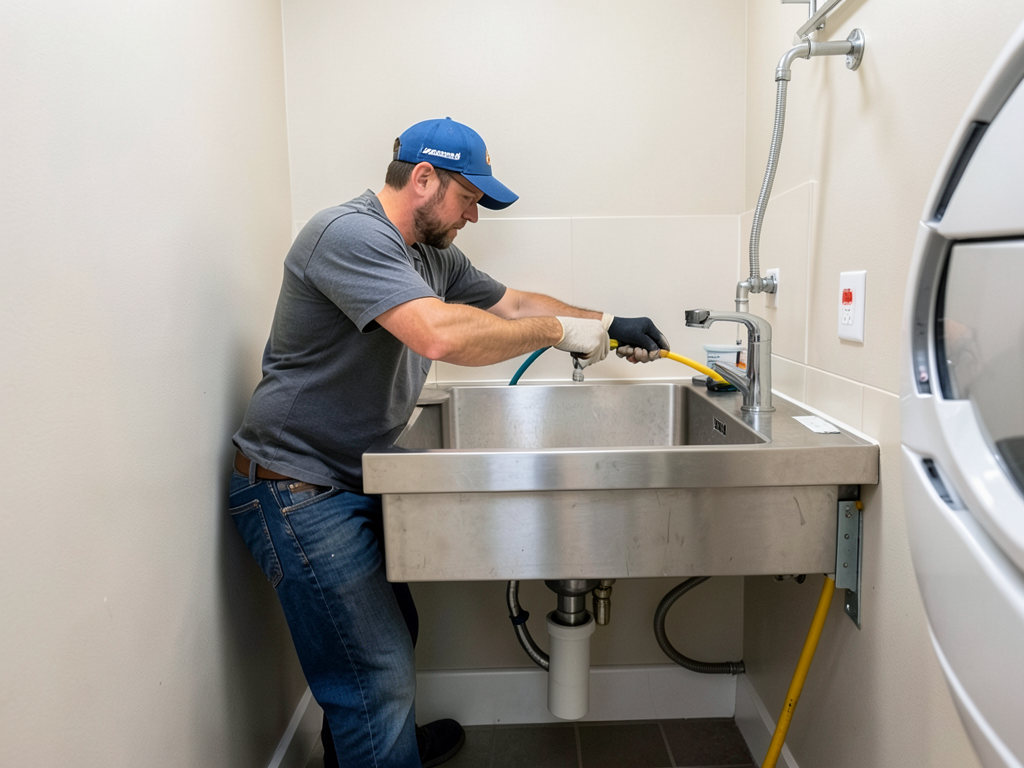
A wall-mounted stainless steel utility sink installed in a narrow Avalon laundry room, showing the heavy-duty mounting brackets and P-trap configuration.
Material Comparison: Which Sink Lasts Longest in Pittsburgh Conditions
Utility sink materials perform differently under heavy use and Pittsburgh’s hard water conditions. Stainless steel resists chemicals and impacts but shows water spots. Cast iron offers unmatched durability but weighs hundreds of pounds. Composite materials provide the best balance of durability and weight for most homeowners. Pittsburgh Backflow Testing and Certification for Local Business Owners.
Stainless steel utility sinks offer the best combination of durability and practicality for most Avalon homes. These sinks resist chemicals, impacts, and Pittsburgh’s hard water without staining or rusting. The brushed finish hides water spots and fingerprints better than polished surfaces. Most quality stainless utility sinks use 18-gauge steel, which provides enough thickness to resist denting while remaining manageable in weight.
Cast iron utility sinks with porcelain enamel coating provide the most durable option available. These sinks resist scratches, stains, and chemicals better than any other material. The porcelain surface stays bright white for decades with proper care. However, cast iron sinks weigh 200-300 pounds empty, requiring reinforced floor support and professional installation. The weight makes them impractical for upper-floor laundry rooms.. Read more about Why your floor drain trap in the Forest Hills garage needs a primer to stop sewer smells.
Composite utility sinks made from polypropylene or acrylic offer the best value for most homeowners. These materials resist chemicals, impacts, and stains while weighing only 20-30 pounds. The non-porous surface prevents bacterial growth and cleans easily with soap and water. Modern composite sinks often include built-in soap dishes, measuring marks, and sound-dampening features.
Acrylic utility sinks provide the lightest weight option at 15-25 pounds. These sinks resist most household chemicals and clean easily with non-abrasive cleaners. The smooth surface prevents soap scum buildup and resists staining from dyes and paints. However, acrylic scratches more easily than stainless or composite materials, so avoid abrasive cleaners and scrub pads.
| Material | Weight (lbs) | Best For | Maintenance Level |
|---|---|---|---|
| Stainless Steel | 30-50 | Industrial use, chemical resistance | Low |
| Cast Iron | 200-300 | Maximum durability, classic look | Medium |
| Composite | 20-30 | Balanced durability and weight | Low |
| Acrylic | 15-25 | Budget installations, light use | Medium |
Essential Features for Heavy Duty Cleaning Performance
Heavy duty cleaning requires specific sink features that standard bathroom sinks lack. Deep basins handle soaking large items without splashing. High-arc faucets provide clearance for buckets and large containers. Built-in washboards and drain boards add functionality for specific cleaning tasks.
Basin depth determines how well your sink handles large cleaning projects. Standard bathroom sinks measure 6-8 inches deep, while utility sinks range from 12-15 inches. The extra depth prevents splashing when filling buckets or soaking large items. For heavy duty cleaning, choose a sink with at least 12 inches of basin depth.
Faucet selection impacts your sink’s cleaning versatility. High-arc gooseneck faucets provide the most clearance for filling buckets and cleaning large items. Pull-out spray faucets offer the most flexibility for rinsing and cleaning. For heavy duty use, choose a faucet with solid brass construction and ceramic disc valves that resist wear.
Integrated features add functionality without requiring additional space. Built-in washboards provide a scrubbing surface for hand-washing clothes or cleaning tools. Integrated drain boards create space for drying items or catching drips from wet tools. Some utility sinks include measuring marks inside the basin for mixing cleaning solutions.
Drain configuration affects how well your sink handles debris and prevents clogs. Side drains work better for utility sinks since they don’t interfere with sink bottom storage. Include a removable strainer basket to catch debris before it enters your plumbing. For heavy duty use, consider a larger 2-inch drain that handles more debris without clogging.
Sound dampening features improve your laundry room experience. Look for sinks with undercoating or padding that reduces noise from running water and clattering items. This feature matters most in laundry rooms adjacent to living spaces or bedrooms.
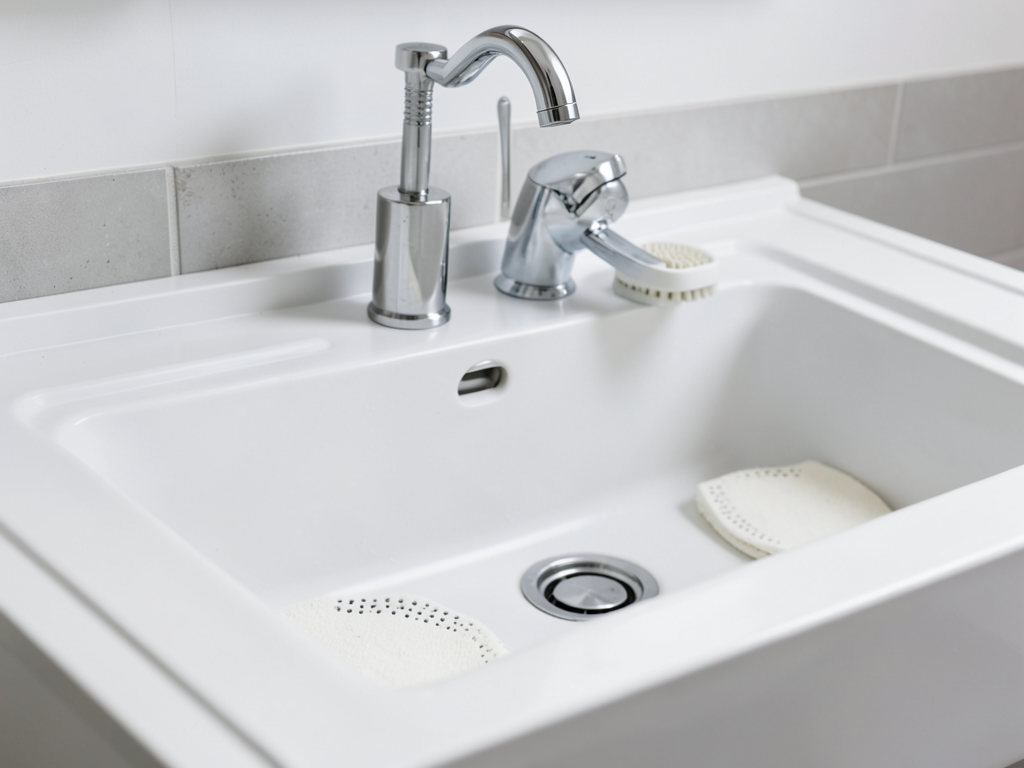
A composite utility sink with integrated washboard and high-arc pull-out faucet, showing the deep basin and side drain configuration.
Installation Requirements for Avalon Homes
Installing a utility sink in your Avalon home requires proper plumbing rough-in and code compliance. Older homes often need plumbing updates to meet current Allegheny County Health Department standards. The installation involves water supply lines, drain connections, venting, and proper support for the sink’s weight.
Water supply lines for utility sinks require 1/2-inch hot and cold lines minimum. The shut-off valves should be easily accessible for maintenance and emergencies. Most installations use compression fittings or push-fit connectors for reliable connections. The water lines should include hammer arrestors to prevent water hammer noise when faucets close quickly.
Drain connections for utility sinks follow specific requirements under Allegheny County plumbing code. The drain must be at least 1.5 inches for standard utility sinks, though 2 inches handles more debris without clogging. The P-trap prevents sewer gases from entering your home and catches debris that could cause clogs deeper in your plumbing system.
Venting proves critical for proper drainage and prevents slow-draining sinks. The vent pipe connects to the drain line and extends through your roof, allowing air to enter the plumbing system. Without proper venting, water drains slowly and creates gurgling sounds. Most utility sink installations require a 1.5-inch vent pipe connected to the main plumbing vent.
Floor support matters especially for heavy cast iron sinks. These sinks can weigh over 300 pounds when full of water, requiring reinforced floor joists or additional support posts. Wall-mounted sinks need heavy-duty mounting brackets secured to wall studs. Freestanding units require level floors and sometimes anchor bolts to prevent tipping.
Permit requirements vary by municipality within Allegheny County. Most sink replacements don’t require permits, but new installations or major plumbing changes might. Check with your local building department before starting work. Professional plumbers handle permit requirements as part of their installation service. The Best Local Plumbers in Mt. Lebanon for Fast Water Heater Repair.
- Prepare the Space
Measure the installation area and verify plumbing rough-in locations. Ensure adequate space for the sink and any planned features like cabinets or shelves.
- Install Water Supply Lines
Run 1/2-inch hot and cold water lines to the sink location. Install accessible shut-off valves and hammer arrestors to prevent water hammer.
- Set Up Drain and Vent
Install the P-trap and connect to the main drain line. Add proper venting to prevent slow drainage and gurgling sounds.
- Mount the Sink
Secure wall-mounted sinks to studs with heavy-duty brackets. Level freestanding units and anchor if required. Connect water supply and drain lines.
- Test and Finish
Check all connections for leaks. Test drainage and venting. Install the faucet and any accessories like soap dispensers or washboards.
Cost Factors and Value Considerations
Utility sink costs vary widely based on material, size, and features. Basic plastic utility tubs start around $50, while professional-grade stainless steel sinks cost $300-500. Installation adds $200-500 for simple replacements and $500-1,500 for complex new installations.
Material costs represent the largest price variable. Basic polypropylene utility tubs cost $50-100 but lack durability for heavy use. Mid-range composite sinks cost $150-300 and offer the best balance of durability and value. Premium stainless steel or cast iron sinks cost $300-800 but provide decades of reliable service.
Installation complexity affects labor costs significantly. Simple sink replacements where plumbing already exists cost $200-400. New installations requiring new water lines, drains, or venting cost $500-1,500. Wall-mounted installations requiring structural reinforcement cost more due to additional labor and materials.
Additional features increase costs but add functionality. High-arc or pull-out faucets cost $100-300 versus $50-100 for basic faucets. Built-in washboards, drain boards, and accessories add $50-200. Professional-grade features like sound dampening and reinforced construction add $100-300.
Long-term value matters more than initial cost for utility sinks. Cheap sinks need replacement every 5-10 years, while quality sinks last 20-30 years. Consider your expected usage and choose materials that match your needs. Heavy use justifies premium materials, while light use might allow budget options.
Warranty coverage varies by manufacturer and material. Basic plastic sinks often have 1-2 year warranties. Quality stainless steel and composite sinks typically offer 5-10 year warranties. Premium brands sometimes provide lifetime warranties on materials and workmanship.
Maintenance Tips for Long-Lasting Performance
Proper maintenance keeps your utility sink functioning well for decades. Regular cleaning prevents stains and buildup. Proper use prevents damage and clogs. Annual inspections catch problems before they cause major issues. Dealing With Old Pipe Problems in Historic Shadyside Homes.
Cleaning routines depend on your sink material. Stainless steel cleans easily with mild soap and water. Avoid abrasive cleaners that scratch the surface. Composite sinks clean with non-abrasive cleaners and soft sponges. Cast iron requires gentle cleaning to protect the porcelain finish.
Preventative measures extend your sink’s life significantly. Use sink mats to prevent scratches from heavy items. Clean spills promptly to prevent staining. Avoid pouring grease or chemicals that could damage the sink or plumbing. Use the removable strainer basket to catch debris before it enters your drain.
Drain maintenance prevents the most common utility sink problems. Clean the P-trap annually to remove buildup and prevent odors. Use enzymatic drain cleaners monthly to break down organic buildup. Never pour paint, chemicals, or grease down your utility sink drain.
Check connections regularly for leaks. Look under the sink monthly for signs of water damage or mold growth. Test shut-off valves annually to ensure they operate smoothly. Listen for changes in drainage sounds that might indicate developing problems.
Winter preparation matters for laundry rooms in unconditioned spaces. Insulate exposed pipes to prevent freezing. Consider heat tape for pipes in exterior walls. Keep the room above 40°F during cold spells to prevent pipe bursts.
A professional plumber testing a newly installed utility sink for leaks, showing the P-trap connection and water supply line fittings.
Frequently Asked Questions
What size utility sink do I need for heavy duty cleaning?
For heavy duty cleaning, choose a sink with at least 12 inches of basin depth and 15-20 gallon capacity. The extra depth prevents splashing when filling buckets or soaking large items. Consider your available space and typical cleaning tasks when selecting size.
Can I install a utility sink myself?
DIY installation works for experienced homeowners with proper plumbing knowledge. Simple replacements where plumbing already exists are manageable. New installations requiring new water lines, drains, or venting are best left to professionals due to code requirements and potential water damage from mistakes.
How much does professional utility sink installation cost?
Professional installation costs $200-500 for simple replacements and $500-1,500 for new installations. Complex installations requiring structural reinforcement or new plumbing runs cost more. Most plumbers provide free estimates after assessing your specific situation.
What’s the best material for a utility sink?
Stainless steel offers the best overall value for most homeowners, combining durability, chemical resistance, and reasonable cost. Composite materials provide excellent durability at lower weight. Cast iron offers maximum durability but requires professional installation due to weight. Choose based on your specific needs and budget.
Do I need a permit to install a utility sink?
Permit requirements vary by municipality in Allegheny County. Simple sink replacements typically don’t require permits. New installations or major plumbing changes might require permits. Check with your local building department or ask your plumber about permit requirements before starting work.
Ready to upgrade your Avalon laundry room with a durable utility sink that handles all your heavy duty cleaning needs? Call (412) 382-8366 today to schedule your free consultation. Our experienced plumbers will assess your space, recommend the best options for your specific needs, and handle the entire installation process from start to finish. Don’t let a failing utility sink slow you down another day. Pick up the phone and call (412) 382-8366 before your next big cleaning project leaves you struggling with inadequate facilities. For more information, visit International Code Council.
You may also find this helpful. Deciding between a pedestal sink or a vanity for your small Stanton Heights powder room.
{
“@context”: “https://schema.org”,
“@type”: “BlogPosting”,
“headline”: “Choosing the best laundry room sink for your heavy duty cleaning needs in Avalon”,
“description”: “Find the perfect utility sink for your Avalon laundry room. Compare materials, sizes, and installation options with expert plumbing advice from Pittsburgh professionals.”,
“wordCount”: 2463,
“datePublished”: “2026-05-05T14:58:00.000Z”,
“dateModified”: “2026-05-05T14:58:00.000Z”,
“inLanguage”: “en-US”,
“mainEntityOfPage”: {
“@type”: “WebPage”,
“@id”: “https://aceplumbingpittsburgh.com”
},
“publisher”: {
“@type”: “LocalBusiness”,
“name”: “Ace Plumbing Pittsburgh”,
“url”: “https://aceplumbingpittsburgh.com”
},
“author”: {
“@type”: “Organization”,
“name”: “Ace Plumbing Pittsburgh”,
“url”: “https://aceplumbingpittsburgh.com”
},
“image”: {
“@type”: “ImageObject”,
“url”: “https://aceplumbingpittsburgh.com/wp-content/uploads/2026/03/choosing-the-best-laundry-room-sink-for-your-heavy-1.png”
}
}
{
“@context”: “https://schema.org”,
“@type”: “Plumber”,
“name”: “Ace Plumbing Pittsburgh”,
“url”: “https://aceplumbingpittsburgh.com”,
“address”: {
“@type”: “PostalAddress”,
“addressLocality”: “Pittsburgh”
},
“areaServed”: {
“@type”: “City”,
“name”: “Pittsburgh”
}
}
{
“@context”: “https://schema.org”,
“@type”: “FAQPage”,
“mainEntity”: [
{
“@type”: “Question”,
“name”: “What size utility sink do I need for heavy duty cleaning?”,
“acceptedAnswer”: {
“@type”: “Answer”,
“text”: “For heavy duty cleaning, choose a sink with at least 12 inches of basin depth and 15-20 gallon capacity. The extra depth prevents splashing when filling buckets or soaking large items. Consider your available space and typical cleaning tasks when selecting size.”
}
},
{
“@type”: “Question”,
“name”: “Can I install a utility sink myself?”,
“acceptedAnswer”: {
“@type”: “Answer”,
“text”: “DIY installation works for experienced homeowners with proper plumbing knowledge. Simple replacements where plumbing already exists are manageable. New installations requiring new water lines, drains, or venting are best left to professionals due to code requirements and potential water damage from mistakes.”
}
},
{
“@type”: “Question”,
“name”: “How much does professional utility sink installation cost?”,
“acceptedAnswer”: {
“@type”: “Answer”,
“text”: “Professional installation costs $200-500 for simple replacements and $500-1,500 for new installations. Complex installations requiring structural reinforcement or new plumbing runs cost more. Most plumbers provide free estimates after assessing your specific situation.”
}
},
{
“@type”: “Question”,
“name”: “What’s the best material for a utility sink?”,
“acceptedAnswer”: {
“@type”: “Answer”,
“text”: “Stainless steel offers the best overall value for most homeowners, combining durability, chemical resistance, and reasonable cost. Composite materials provide excellent durability at lower weight. Cast iron offers maximum durability but requires professional installation due to weight. Choose based on your specific needs and budget.”
}
},
{
“@type”: “Question”,
“name”: “Do I need a permit to install a utility sink?”,
“acceptedAnswer”: {
“@type”: “Answer”,
“text”: “Permit requirements vary by municipality in Allegheny County. Simple sink replacements typically don’t require permits. New installations or major plumbing changes might require permits. Check with your local building department or ask your plumber about permit requirements before starting work.”
}
}
]
}
{
“@context”: “https://schema.org”,
“@type”: “HowTo”,
“name”: “How to Install a Utility Sink”,
“step”: [
{
“@type”: “HowToStep”,
“position”: 1,
“name”: “Prepare the Space”,
“text”: “Measure the installation area and verify plumbing rough-in locations. Ensure adequate space for the sink and any planned features like cabinets or shelves.”
},
{
“@type”: “HowToStep”,
“position”: 2,
“name”: “Install Water Supply Lines”,
“text”: “Run 1/2-inch hot and cold water lines to the sink location. Install accessible shut-off valves and hammer arrestors to prevent water hammer.”
},
{
“@type”: “HowToStep”,
“position”: 3,
“name”: “Set Up Drain and Vent”,
“text”: “Install the P-trap and connect to the main drain line. Add proper venting to prevent slow drainage and gurgling sounds.”
},
{
“@type”: “HowToStep”,
“position”: 4,
“name”: “Mount the Sink”,
“text”: “Secure wall-mounted sinks to studs with heavy-duty brackets. Level freestanding units and anchor if required. Connect water supply and drain lines.”
},
{
“@type”: “HowToStep”,
“position”: 5,
“name”: “Test and Finish”,
“text”: “Check all connections for leaks. Test drainage and venting. Install the faucet and any accessories like soap dispensers or washboards.”
}
],
“image”: “https://aceplumbingpittsburgh.com/wp-content/uploads/2026/03/choosing-the-best-laundry-room-sink-for-your-heavy-1.png”
}
{
“@context”: “https://schema.org”,
“@type”: “BreadcrumbList”,
“itemListElement”: [
{
“@type”: “ListItem”,
“position”: 1,
“name”: “Home”,
“item”: “https://aceplumbingpittsburgh.com”
},
{
“@type”: “ListItem”,
“position”: 2,
“name”: “Blog”,
“item”: “https://aceplumbingpittsburgh.com/blog”
},
{
“@type”: “ListItem”,
“position”: 3,
“name”: “Choosing the best laundry room sink for your heavy duty cleaning needs in Avalon”
}
]
}
{
“@context”: “https://schema.org”,
“@type”: “Service”,
“serviceType”: “Plumbing”,
“provider”: {
“@type”: “LocalBusiness”,
“name”: “Ace Plumbing Pittsburgh”,
“url”: “https://aceplumbingpittsburgh.com”
},
“areaServed”: {
“@type”: “City”,
“name”: “Pittsburgh”
},
“description”: “Find the perfect utility sink for your Avalon laundry room. Compare materials, sizes, and installation options with expert plumbing advice from Pittsburgh professionals.”
}